A new chapter towards ’25 and out’

Parliament has passed the 2025 federal budget bill! With the adoption of the Budget Implementation Act on March 26, 2026, our fight to see members treated like the broader law enforcement community and benefit from the possibility of early retirement after 25 years of service, has entered a new chapter.

This is a momentous step for our union: The federal government has now fulfilled a major part of its commitment to put in place legislation to make “25 and out” a reality. While details regarding an exact date for these changes to come into force have yet to be confirmed — along with information on how the required changes will be implemented — the adoption of this bill has secured new rights for our members.

Work remains before our membership can enjoy these rights, and we expect the Public Service Pension Advisory Committee (PSPAC), on which PSAC sits, to be consulted extensively to establish the guidelines around access to early retirement after 25 years of service.

We will make sure to keep you updated as this process unfolds.

FB members set priorities for next round of bargaining

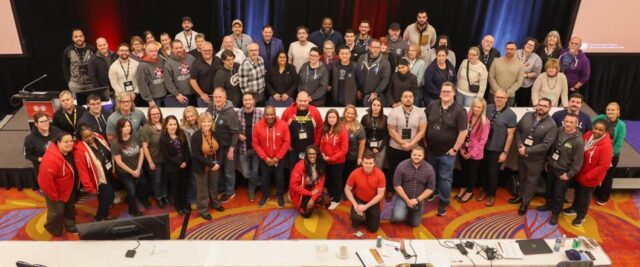
PSAC members representing the Customs and Immigration Union (CIU) gathered in Ottawa from March 24 to 26 for the FB National Bargaining Conference to elect their bargaining team and set priorities that will drive the next round of negotiations for the Border Services (FB) group.

With the collective agreement set to expire June 20, 2026, 60 delegates reviewed proposals submitted by FB members nationwide identifying the key issues for more than 9,000 PSAC-CIU members working for the Canada Border Services Agency (CBSA).

Members are under pressure

Delegates shared firsthand experiences of managerial misconduct, excessive overtime, growing reliance on students and contractors, concerns over job security, and the need for better leave provisions.

The pressures are felt across regions and workplaces, with about 20 per cent of all overtime expenditures within the core public administration paid to FB members alone. This staggering number highlights CBSA staffing shortages that place both physical and mental strain on members to keep operations running.

Delegates helped to set clear bargaining priorities, including: 

  • Fair compensation that reflects the realities of the job
  • Improved leave provisions for all members
  • Tackling excessive overtime and workload pressures
  • Strengthening job security and reducing reliance on precarious work
  • Building safer, healthier, and more respectful workplaces

These priorities will guide the bargaining team as they meet in April to finalize the full package of demands and prepare for negotiations. PSAC has already served notice to bargain.

Women fighting for women’s issues

In one powerful demonstration of solidarity, every woman at the conference stepped up together to share their personal experiences regarding accessibility rights, harassment, discrimination, health and safety, and work-life balance.

“A lot of brave, first-time attendees got up to share their stories, and spoke from the heart,” said Brea Baresinkoff, CIU Second National Vice-President. “The experiences they shared were raw and personal, but they are the realities we face every day. It reminded us of all the bargaining demands that affect women and made it clear that if it’s an issue that affects women, it’s a women’s issue.”

Women made up more than half the delegates, with the women’s caucus providing a space to share experiences and reinforcing the importance of addressing these issues at the bargaining table.

What members can do now

Even at this early stage, member engagement strengthens the bargaining team and sends a clear message to the employer. You can:

  • Talk with your coworkers about bargaining priorities and workplace challenges.
  • Sign up for emails to receive the latest bargaining updates.
  • Follow CIU on social media to stay connected.

Send a message to your bargaining team to share your experiences and show your support as they prepare for negotiations.

We will continue to share updates as bargaining progresses and how you can get involved at every stage.

If you have any questions, please contact your CIU branch president.

This article was first published on the PSAC website.

“Blatant disregard by the Agency for its Human Rights obligations as an employer”: Letter of support from NDP MP Heather McPherson for accommodated officers

In a letter to Minister of Public Safety Gary Anandasangaree sent on March 2, New Democratic Party MP Heather McPherson (Edmonton Strathcona) called upon the federal government to ensure the Canada Border Services Agency respect its human rights obligations toward accommodated Border Services Officers, and treat these officers with the dignity they deserve.

Expressing support for affected officers, the MP stressed their right to a fair accommodation process, denouncing the blanket nature of CBSA’s ongoing review of accommodation agreements.

The list of duties accommodated officers can perform is vast” wrote McPherson to the Minister, pointing out that “it does not make sense for CBSA to push out 200 trained, highly qualified officers who bring years of experience to the table, at the same time your government has made it a priority to hire a thousand new border officers and workers. Canada simply cannot afford to lose this expertise.”

We thank MP McPherson for her support in this matter, and we look forward to the Minister’s response.

Read the original letter here.

Treasury Board bargaining: Mediators appointed for PA and EB groups

bargaining-pattern_psac

The Federal Public Sector Labour Relations and Employment Board has informed PSAC that it will appoint mediators following the PA and EB bargaining teams declaring impasse last month. Mediation is now scheduled for April 28–30 for the PA group, with dates to be determined for the EB group.

PSAC accepts the opportunity to work with a third-party mediator to move discussions forward and help break the deadlock in negotiations.

Board delays decision on PIC process 

When PSAC declared impasse last month, we asked the Board to skip the PIC process so bargaining could move forward more quickly. Treasury Board opposed that request, arguing the parties were not at impasse and that a PIC should be set up if the Board determined an impasse existed.

Rather than deciding on this request now, the Board will appoint mediators to work with the parties and reserve its decision on any other requests until May 29 or the conclusion of mediation.

Moving forward 

Our bargaining teams will approach mediation in good faith and remain ready to negotiate a fair agreement that reflects the priorities of our members on key issues, including remote work, job security, wages, and workforce adjustment.

This article was first published on the PSAC website.

International Women’s Day 2026

March 8 is International Women’s Day, and the CIU Standing Women’s Committee wishes to acknowledge the continued work of all activists and members within our union who identify as women, without whom many of our victories and achievements would never have become reality. A true force for mobilization in the face of adversity, women from all backgrounds are consistently at the forefront of the union movement, defending our rights and fighting for greater equality.

On International Women’s Day, it is important to recognize the work that can be done within our own union and communities to advance women’s rights. That is why we want to share the message behind this year’s campaign, “Give to Gain”, which emphasizes a mindset of generosity and collaboration, suggesting that when individuals and communities invest in women, everyone thrives.

“Each time a woman stands up for herself, without knowing it possibly, without claiming it, she stands up for all women.” — Maya Angelou

On behalf of the entire Customs and Immigration Union, to all the women who are working to take down barriers and build a fairer, more just world, we extend our most heartfelt solidarity.

– The CIU Standing Women’s Committee

Know your rights as a term employee during federal job cuts

While workforce adjustment and employment transition provisions in federal collective agreements are designed to limit the harm of job cuts for indeterminate employees, term employees face a different — and often more precarious — reality.

Term employees are frequently the first to lose their jobs when cuts are announced. In many departments, the accumulation of service toward conversion to indeterminate status has also been suspended.

All the uncertainty can be stressful, which is why we’ve compiled information for term employees that outlines their rights and entitlements, including:

  • Whether formal recourse is available for non-renewal or early termination
  • How term employment conversion to indeterminate works
  • What “stopping the clock” on term conversion means

Select your employer to access the resource: Treasury Board – CRA – Parks Canada – CFIA

This resource is designed to help you better understand your rights as a term employee and where your union can provide support. If you have questions, contact your PSAC component union.

This article was first published on the PSAC website.

PSAC takes legal action over rollout of Early Retirement Incentive

psac logo scfp
psac logo scfp

PSAC has filed a policy grievance and unfair labour practice (ULP) complaint in response to the federal government’s unilateral implementation of the Early Retirement Incentive (ERI) program.

PSAC does not oppose early retirement options, but any program to prevent involuntary layoffs must be negotiated, lawful, and protect workers’ rights. No one should be pressured into giving up hard-won protections

Workers were notified about potential ERI eligibility before full program details were available and without a formal workforce adjustment situation. This bypasses key obligations under our collective agreements and creates confusion at a time when clarity and transparency are essential.

Choosing ERI could strip workers of important protections and benefits under the Workforce Adjustment Appendix and Employment Transition Policy, including the transition support measure (a cash payment based on your years of service), the education allowance (reimbursement of up to $17,000 for receipted educational expenses), and counselling services of up to $1,200 to support potential re-employment or retirement, such as financial counselling or job placement assistance.

Why this matters

This legal action challenges the employer’s violation of Article 6 and the Workforce Adjustment Appendix and Employment Transition Policy, which undermines our collective agreements. Specifically, the employer has:

  • Treated ERI like a Voluntary Departure Program without meeting the requirements for such programs or consulting PSAC as required.
  • Contacted employees before full details were available, failing to properly advise members of their rights under workforce adjustment.

Workforce adjustment is a well-established, negotiated process that protects workers. ERI does not meet the same standards. For those affected by job cuts, incomplete or premature information can lead to irreversible decisions about careers, pensions, and entitlements. The rushed rollout has created confusion and pressure, and workers are being asked to make decisions without all the facts.

What we’re asking for

The legal action calls on the employer to ensure that any early retirement program falls under the negotiated workforce adjustment process and that the union is consulted before any notifications or decisions are made.

PSAC is pressing the government to meet immediately and provide full details so workers can understand the potential impact of this program. Members deserve access to every tool available to protect their jobs, and those tools must be lawful, transparent, and consistent with collective agreements.

Impact on members

The government has not yet released all the necessary details about ERI, so it is not possible to fully assess how choosing this option could affect workers’ career, pension, or entitlement.

Once full information is available, PSAC will provide a clearer breakdown of potential impacts. In the meantime, members are encouraged to carefully consider their options, know their rights, and speak with their union representative before making any decisions about early retirement.

This article was first published on the PSAC website.

FB group: Notice to bargain filed ahead of bargaining conference

PSAC has taken the first step toward the next round of negotiations for over 9,000 members in the FB group by serving Treasury Board with notice to bargain.

After issuing a call for bargaining input, the union received over 1,000 proposals from members working for the Canada Border Servies Agency (CBSA). Next month, from March 24–26, members from every Customs and Immigration Union (CIU) branch across the country will gather in person at the National FB Bargaining Conference in Ottawa to discuss members’ priorities and elect a bargaining team for the next round of negotiations.

Initial bargaining dates will be set following the conference. The current collective agreement expires on June 20, 2026.

The mobilization by FB members during our last round of bargaining was critical to securing important gains — including stronger protections against CBSA management and improvements that bring our working conditions and retirement eligibility more in line with other law enforcement agencies across Canada.

PSAC-CIU members at CBSA go above and beyond every day to protect our borders. It’s time for the employer to recognize that dedication and hard work by making CBSA a better, safer place to work.

Stay in touch

Make sure your contact information is up to date in the member portal to receive the latest bargaining updates.

If you have any questions, contact your CIU branch president.

This article was first published on the PSAC website.

Job cuts at CBSA and Veterans Affairs show no one is safe

The growing list of workers affected by the federal government’s sweeping cuts to public services now includes those helping to keep borders secure, and those supporting veterans and their families.

More than 400 members of the Public Service Alliance of Canada (PSAC) and the Customs and Immigration Union (CIU) at the Canada Border Services Agency received notices last week that they could lose their jobs. At the same time, members of PSAC and the Union of Veterans’ Affairs Employees (UVAE) working at the Bureau of Pension Advocates are facing a 44 per cent reduction in staff.

Together, these decisions send a clear message that no service — and no worker — is safe from this government’s reckless cuts to federal programs.

“Prime Minister Carney is using the same old playbook that Chrétien and Harper did, and we’re going to get the same bad results,” said Sharon DeSousa, PSAC national president. “This government needs to stop recycling failed austerity measures and start investing in the public services people in Canada rely on every day.”

The cuts are part of the federal government’s plan to slash critical public services and eliminate 30,000 more federal public service jobs over the next three years. More than 13,000 PSAC members have already received notices that they could lose their jobs.

Border services on the chopping block

PSAC-CIU members at the Canada Border Services Agency play a critical role in border security, trade enforcement, and public safety. Yet 445 members received workforce adjustment notices as part of $208 million in planned cuts at the agency.

“It is disconcerting to see the federal government reduce the public service at a time when people in Canada need the services our members provide more than ever,” said Mark Weber, CIU national president. “The decision to eliminate crucial knowledge and expertise will only serve to make Canada less safe.”

These notices are being distributed at a time of increasing pressure on border operations. Cutting frontline capacity and expertise will weaken Canada’s ability to respond to emerging risks and ensure the smooth movement of people and goods.

Cutting veterans’ services while backlogs grow

Cuts at the Bureau of Pension Advocates within Veterans Affairs Canada (VAC) will shrink its workforce by 44 per cent — from 226 employees to 130 — through the elimination of 72 term positions and 24 contract lawyers. The bureau provides free legal advice, assistance, and representation to veterans, RCMP members, and their families.

“Veterans and their families depend on timely, professional support and should not be forced to fight for the benefits they have earned,” said Toufic El-Daher, UVAE national president. “Fewer staff means longer waits and unnecessary hardship for those who have already given so much.”

With 27,000 claims already in the backlog and another 25,000 expected in 2026, cutting legal and support staff by nearly half will inevitably create further delays and barriers — potentially tripling the existing one-year wait time.

These cuts come despite VAC identifying $4.4 billion in long-term savings by lowering the reimbursement rate for medical cannabis for veterans and RCMP members. Those savings are coming directly from veterans themselves, many of whom may now face higher out-of-pocket costs for medical cannabis prescribed to manage PTSD, chronic pain, and other service-related injuries. There is no need for these cuts, yet the department is moving forward anyway — leaving veterans to shoulder the burden twice.

PSAC and UVAE are calling for stable, permanent funding for the Bureau of Pension Advocates to ensure continuity of service. Veterans deserve timely, high-quality support, and that depends on stable staffing and long-term investment.

Cuts to workers mean cuts to services

The government has framed these cuts as responsible fiscal management, but the reality is simple: cutting public service jobs means cutting public services.

Whether it’s veterans waiting longer for benefits, families relying on timely border processing, or communities depending on public safety enforcement, the impact will be felt far beyond federal workplaces.

PSAC will continue to fight these reckless and damaging cuts and defend the public services people rely on every day.

This article was first published on the PSAC website.

The New Union Frontier, episode 5 — Politics: What is it good for? (part one)

We hear it all the time, “why does the union get political?”

In part one of this episode, Amanda sits down with former MP, current radio host and lifelong activist Brian Masse, along with CIU National President Mark Weber. Together, they pull back the curtain on the political side of union work.

  • How decisions made in Ottawa directly impact all members
  • What really happens behind closed doors before a question is asked in the House?
  • Why union voices must be at the table, and what happens when they’re not

Head over to ciu-sdi.ca/podcast to listen now!

Podcast host Amanda with guest Mark Weber and Brian Masse.