Clarifying Branch membership allocation rules

Photo of CIU flag

CIU National President Mark Weber sent the following memorandum to the CIU National Board of Directors on July 20, 2023, on behalf of the National Executive.


Members of the National Board of Directors,

The question of Branch membership allocation was recently brought to the attention of the CIU National Executive, in the context of members who physically work in a given geographical area under the jurisdiction of one Branch, but who report to an office located in a different geographical area under the jurisdiction of another Branch. After careful consideration of the matter, the CIU National Executive would like to offer the following additional guidance to clarify existing allocation rules.

The National Executive found that the question of Branch membership allocation mainly revolves around CIU Branch Rule 5.3 and CIU By-Law 7.5(2), which state:

  • Branch Rule 5.3 “As a general rule, the membership allocation shall be where the member physically In cases where the membership allocation is in question, the CIU National Executive shall decide where the member will be allocated in the best interest of the organization.”
  • By-Law 5(2) “[…] the CIU National Office shall remit to the Branch the dues portion accruing to the Branch based on calculation of members and Rands whose place of work is in the Branch’s jurisdiction.”

The question of where the work is performed, and therefore what constitutes the “place of work”, is central in allocating Branch membership. For most members, Branch allocation is straightforward, as they physically work in the same geographical area as the office they report to, often in the exact same location, and under the jurisdiction of the same union Branch.

However, where a member physically works in a given geographical area but reports to an office located in another geographical area, as per Branch Rule 5.3 the place of work must be considered to be where the member physically performs work, and not where they report to. In this case, the member should be allocated to the union Branch which has jurisdiction over the geographical area of the member’s physical place of work, both for representation and remittance of union dues.

This principle applies no matter the work arrangement. The determining factor in membership allocation is the physical location where work is being performed, not the location of the CBSA office/manager the member reports to. In cases where a member has a telework or hybrid work arrangement, Branch membership allocation is determined based on where the member physically works. If the member works from a CBSA office some of the time, the Branch representing that CBSA office is the branch that member belongs to. If the member works from home 100% of the time, the branch representing the nearest CBSA office where the member would report to is the branch that member belongs to. On the rare occasion where a member who works from home lives in an area serviced by one Branch, and the nearest physical CBSA office where the member would be expected to come into work is serviced by a different Branch, membership allocation will be based on the location of the CBSA office/satellite office.

Example

Under a telework arrangement, Bill lives in Southern British Columbia but reports to a CBSA office located in Toronto. Twice a week, Bill has to go to a physical CBSA workplace to perform some of his work. He does so at the nearest CBSA office, also located in Southern BC. Even though Bill ultimately reports to an office located in Toronto, he is a member of the Branch which has jurisdiction over the area where the work is being physically performed. In this case, this would be the CIU BC Southern Branch, and not the CIU Toronto Branch, as Bill lives and works in Southern British Columbia.

Past interpretation

It is important to note that the above is not a novel interpretation and echoes the principles set in a 2005 decision by then CEUDA National President Ron Moran.

Assignments and secondments

Members who are on assignment or on secondment for more than six months should be allocated to the CIU Branch servicing the location of the assignment or secondment, according to the same principles outlined above. In order to simplify the allocation process and to avoid unnecessary complications, Branch membership re-allocation will not be required for assignments or secondments under six months.

Other considerations

It is worth noting that the importance of assigning a member to the Branch servicing the area where a member physically works is not purely academic and has tangible, practical implications. From the point of view of union-related activities, it makes little sense for a member physically residing and working in City A to be allocated to a Branch whose jurisdiction is in City B, where both cities are hours apart, even if the member’s manager is in City B. The member residing in City A would attend rallies, picket lines and other union activities taking place in City A, overseen by the Branch whose jurisdiction is in City A. It is the Branch whose jurisdiction is in City A that would help the member should they require assistance. In the event of a strike, it is the same Branch that would pay their strike pay top-up. Why then should they be a member of another Branch, in City B or elsewhere?

Next steps

In light of the above, it is likely that Branch Presidents will want to review their local membership list. The CIU National Executive invites Branch Presidents to work together to ensure members are assigned to the proper Branch, based on the principles outlined previously. Any necessary change should be communicated to membership@ciu-sdi.ca. Should you have any questions, please contact the National Vice-President assigned to your Branch.

In solidarity, and on behalf the CIU National Executive,

Mark Weber
National President


PDF version of documents:
Donations to Nunavut Employees Union: Support striking workers | ᐃᑲᔪᕈᒪᔪᑦ ᑮᓇᐅᔭᖅᑎᒍᑦ ᑐᓂᓯᔪᓐᓇᖅᑐᑦ ᓄᓇᕘᒥ ᐃᖅᑲᓇᐃᔭᖅᑏᑦ ᑲᑐᔾᔨᖃᑎᒌᖏᓐᓄᑦ : ᐃᑲᔪᕈᒪᓂᖏᑦ ᐱᓱᑉᐸᑦᑐᓂᑦ ᐃᖅᑲᓇᐃᔭᖅᑎᓂᑦ

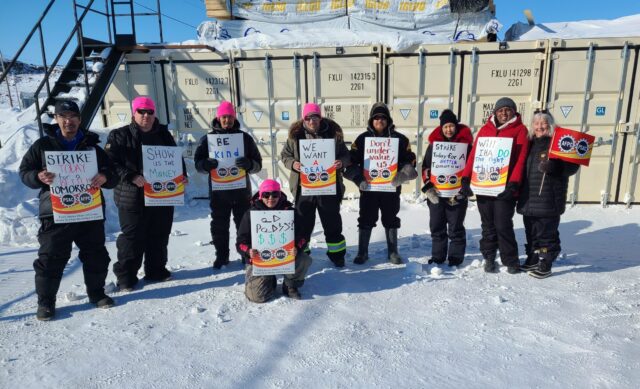
PSAC-NEU (Nunavut Employees Union) members working for the Iqaluit Housing Authority (IHA) have been on strike for nearly three months. During that time, the employer’s behaviour has been nothing short of appalling, with IHA locking out workers two days after union members first started walking the picket line on March 17, resorting to using scabs (while denying doing so), and proposing language at the bargaining table that only serves to insult, belittle, and infantilize striking workers. While the lockout itself has since been lifted, the employer’s offer and behaviour remain wholly unacceptable, and the strike continues.

Earlier this week, the CIU National Executive voted to donate $1500 to NEU to support striking workers in their fight against an unfair and unreasonable employer. We encourage all CIU Branches to consider making a donation of any amount. This blatant disregard for both worker and human rights cannot be tolerated. Please see the latest NEU bargaining update or visit https://www.neu.ca/ for more information on this outrageous labour dispute.


ᑭᒃᑯᑐᐃᓇᓐᓄᑦ ᐃᖅᑲᓇᐃᔭᖅᑏᑦ ᑲᑐᔾᔨᖃᑎᒌᖏᓐᓂᑦ ᑲᓇᑕᒥ-ᓄᓇᕘᒥ ᐃᖅᑲᓇᐃᔭᖅᑏᑦ ᑲᑐᔾᔨᖃᑎᒌᖏᑦ ᑭᒡᒐᖅᑐᐃᔨᖏᑦ ᐱᓕᕆᐊᕆᔭᖏᓐᓂᑦ ᐃᑲᓗᓐᓂ ᐃᓪᓗᓕᕆᔨᒃᑯᑦ ᐃᖅᑲᓇᐃᔭᖅᑎᖏᑦ ᐃᖅᑲᓇᐃᔭᖅᑕᐃᓕᓯᒪᓂᖏᑦ ᑕᖅᑭᐅᓗᐊᑦ ᒪᕐᕉᓕᖅᑐᑦ ᐅᖓᑖᓄᑦ.  ᑕᕝᕘᓈᖅᑎᓪᓗᑕ ᐃᖅᑲᓇᐃᔭᕝᕕᐅᑉ ᐱᓇᓱᐊᕐᓂᖏᑦ ᓇᕐᕈᓇᖕᒪᕆᒃᐳᑦ, ᐃᓪᓗᓕᕆᔨᒃᑯᓪᓗ ᐃᖅᑲᓇᐃᔭᖅᑎᓂᑦ ᐃᖅᑲᓇᐃᔭᕈᓃᖁᔨᓪᓗᑎᑦ ᐋᔩᖃᑎᒌᑎᓪᓗᒋᑦ ᐅᓪᓗᓄᒃ ᒪᕐᕉᖕᓄᒃ ᐱᓱᓕᑕᐃᓐᓇᑎᓪᓗᒋᑦ ᒫᑦᓯ 17ᖑᑎᓪᓗᒍ, ᐊᓯᖏᓐᓄᓪᓗ ᓵᙵᖔᓕᖅᓱᑎᑦ ᐃᖅᑲᓇᐃᔭᖅᑎᒃᓴᓂᑦ (ᑕᐃᒪᐃᙱᖑᐊᖅᑐᑦ) ᐅᖃᐅᓯᐅᓪᓗ ᒥᔅᓵᓄᑦ ᐋᔩᖃᑎᒌᑦᑎᓪᓗᑕ ᓈᒻᒪᙱᓐᓂᖅᐹᒥᑦ ᓱᕐᓗ ᒥᑭᓪᓕᑎᒃᓯᓇᓱᑐᐃᓐᓇᕋᒥ, ᓱᕈᓯᓛᖅᑎᑐᓪᓗ ᐱᔭᐅᓪᓗᑎᑦ ᓇᒻᒥᓂᖅ ᐃᓱᒪᖃᖏᑦᑐᑎᑐᑦ.  ᐃᖅᑲᓇᐃᔭᒍᓐᓃᖁᔭᐅᓂᖏᑦ ᐲᖅᑕᐅᓯᒪᓕᖅᑑᒐᓗᐊᑦ ᑭᓯᐊᓂ, ᐃᖅᑲᓇᐃᔭᕝᕖᑦ ᐱᐅᓯᖓᑦ ᐋᔩᖃᑎᒌᕈᑕᐅᔪᓂᑦ ᓱᓕ ᓈᒻᒪᔅᓯᓯᒪᖏᒻᒪᑦ, ᑕᐃᒪᐃᖕᒪᑦ ᓱᓕ ᓄᖅᑲᖓᕗᑦ ᐱᓱᑉᐸᑦᑐᓪᓗ ᐃᖅᑲᓇᐃᔭᖅᑏᑦ.

ᐱᓇᓱᐊᕈᓯᕆᔭᑦᑕ ᓯᕗᓂᐊᒍᑦ, ᓴᓇᔪᓕᕆᔨᒻᒪᕇᑦ ᓂᐅᕐᕈᑎᒃᓯᔩᓪᓗ ᑭᒡᒐᖅᑐᐃᔨᖏᑦᑕ ᑲᑎᒪᔨᖏᑦ ᓂᕈᐊᓐᓂᓚᐅᖅᑐᑦ ᑐᓂᓯᒍᒪᓪᓗᑎᑦ ᑮᓇᐅᔭᓂᑦ ᐃᑲᔪᕈᒪᓂᒻᒥᓄᑦ $1500ᓂᒃ  ᑖᒃᑯᓇᙵᑦ ᑭᒡᒐᖅᑐᐃᔪᓂ ᑐᕌᖓᓂᐊᖅᑐᓄᑦ ᐱᓱᑉᐸᑦᑐᑦ ᐱᓪᓗᒋᑦ ᐊᖓᔪᖄᖃᑲᒻᒪᑦᑐᑎᑦ ᓈᒻᒪᒍᓐᓃᖅᑎᒃᓯᓂᒧᑦ.  ᑲᔪᖏᖅᓱᐃᕗᒍᑦ ᓴᓇᔪᓕᕆᔨᒻᒪᕇᑦ ᑭᒡᒐᖅᑐᐃᔨᖏᑦ ᑕᐃᒫᔅᓴᐃᓐᓇᖅ ᐃᑲᔪᖁᓪᓗᒋᑦ ᖃᑦᓯᑐᐃᓐᓇᓯᐊᒻᒥᑦ.  ᑕᒪᓐᓇ ᖁᔭᓈᖅᓯᓯᒪᓂᖅ ᐃᖅᑲᓇᐃᔭᖅᑎᖁᑎᒻᒥᓂᑦ ᐊᒻᒪᓗ ᑭᒃᑯᓕᒫᑦ ᐱᔪᓐᓇᐅᑎᖏᑦ ᑕᑯᓪᓗᒋᑦ ᓈᒻᒪᖏᒻᒪᑦ.  ᑕᑯᒋᐊᒃᑭᑦ ᒫᓐᓇᐅᔪᖅ ᑭᒡᒐᖅᑐᐃᔩᑦ ᐊᑐᖅᑕᖏᑦ ᐅᕝᕙᓘᓐᓃᑦ ᐃᑭᐊᖅᑭᕕᐊᓄᑦ www.neu.ca ᑐᑭᓯᒋᐊᒃᑲᓐᓂᕈᒪᒍᕕᑦ ᖃᓄᐃᓘᓕᒻᒪᖔᑕ ᐱᓗᐊᖅᑐᒻᒪᕆᐊᓗᒃᑯᑦ ᐋᔩᖃᑎᒌᖕᓂᖏᑦ.

Public Service Health Care Plan: Transition Update

PSAC logo SCFP
PSAC logo SCFP

On July 1, 2023, the federal government implemented a transfer of the Public Service Health Care Plan (PSHCP) provider from Sun Life to Canada Life, resulting in changes for more than 1 million federal public service workers, retirees and their dependents. This change was initiated and operationalized by the employer, and it is the Employer’s obligation to make the transition as seamless as possible.

PSAC is aware of some challenges associated with enrollment into the new plan and has since been told that Canada Life has added additional staff in response to the spike in call volume, and we will continue to pressure the government to improve the process for members.

Remember to enroll

If you have not yet completed your positive enrolment and have incurred expenses, they can still be claimed, however, reimbursement will not proceed until the enrollment process is complete.

How to enroll 

To qualify, members have to fill out their positive enrolment in one of two ways: online or by mail:

  • Online enrolment: Canada Life is sending an email to members who opted to receive electronic communications in their Sun Life PSHCP Member Services account. The email includes a link that is active for 30 days. After the 30-day period, Canada Life will send another email with a new link.
  • Enrolment by mail: Canada Life is sending a positive enrolment package in the mail for members who elected to receive paper-based communications from Sun Life. The package contains: a paper enrolment form, instructions on how to complete positive enrolment (including digitally), and a postage-paid return addressed envelope.

Once your enrolment is processed, members will receive a confirmation letter and a PSHCP benefit card.

This article was first posted on the PSAC website.

National Indigenous People’s Day: Reconciliation requires ongoing commitment and action

First Nations Women performing a Fancy Shawl Dance in a grass field with a river background

On June 21, Canada’s unions are marking National Indigenous People’s Day by reaffirming our steadfast commitment to advancing reconciliation and justice for Indigenous peoples, within our communities and workplaces across the country. This includes continuing to demand urgent action from the federal government on reconciliation with First Nations, Inuit and Métis peoples.

“The impacts of Canada’s violent colonial history continue to be experienced by Indigenous peoples. Disproportionately high rates of violence against Indigenous women, girls and two-spirit peoples, persistent drinking water advisories on reserves, the over-representation of Indigenous children in the child welfare system and the same over-representation of Indigenous adults in the Canadian judicial system are all manifestations of colonial systems, which continue to cause serious harm to Indigenous peoples to this day. This is our collective shame as a nation and we must do absolutely everything in our power to address it,” said Bea Bruske, President of the Canadian Labour Congress.

At the CLC’s 30th Constitutional Convention last month, Indigenous delegates from across the country spoke powerfully about the pressing need for unions to play a more active role in reconciliation, as well as the need for stronger commitments and action from settler allies more broadly. Delegates came together to adopt an action plan on Indigenous justice: one that closes gaps in equity and advocates for improved socio-economic conditions for Indigenous workers and communities; increases awareness and education around Canada’s history and legacy of colonization and its ongoing inhumane impacts on First Nations, Métis and Inuit peoples; and advances Indigenous rights and justice both within and outside of the labour movement.

“We are dedicated to moving forward in partnership with Indigenous Peoples, in a spirit of reconciliation and striving for justice. We are committed to making substantive change in our workplaces, our communities and within the labour movement,” said Bruske.

The Truth and Reconciliation Commission’s (TRC) 94 Calls to Action, the Missing and Murdered Indigenous Women and Girls and Two Spirit People (MMIWG2S) Inquiry’s 231 Calls to Justice, and the United Nations Declaration on the Rights of Indigenous Peoples (UNDRIP) all uphold the rights of Indigenous peoples to maintain and protect their cultural heritage, as well as the responsibilities of government to integrate Indigenous rights and justice into its practices and policies. Canada’s unions will continue to fight to ensure the full implementation of all three.

There remains much work to be done: as of April 30, 2023, 37% of the 94 TRC Calls to Action were either stalled or not started, and to date, only two of the MMIWG2S Inquiry’s 231 calls have been completed. More than half haven’t even been started.

“Reconciliation requires immediate, concrete and sustained action from government. Inuit, Métis and First Nations peoples should not have to keep waiting for justice, especially when the path to achieving this has been so clearly laid out. Justice is long overdue,” said Lily Chang, Secretary-Treasurer of the CLC.

Canada’s unions continue to firmly support Indigenous communities’ demands for the federal government to:

  • End all short and long-term boil water advisories in First Nations communities and improve on-reserve infrastructure and reliable access to clean drinking water;
  • Complete all of the TRC Calls to Action and the Calls to Justice from the National Inquiry into Missing Murdered Indigenous Women Girls and Two Spirit People; and
  • Implement the United Nations Declaration on the Rights of Indigenous Peoples (UNDRIP) as the framework for reconciliation, and develop a strong national action plan, strategies, and other concrete measures to achieve the goals of the UNDRIP

This article was first posted on the CLC website.

FB bargaining: PSAC-CIU tables wage demands

bargaining-FB-négos
bargaining-FB-négos

Our FB Bargaining Team met with Canada Border Services Agency (CBSA) and Treasury Board June 13-16 to continue talks towards a new collective agreement. After conducting a comprehensive analysis of compensation and working conditions within the law enforcement community, we presented our wage demands.

We have proposed aligning our wage grid with that of the RCMP. Additionally, we have proposed that all employees in the bargaining unit be granted a paid meal period, as is the standard practice across the law enforcement community.

Furthermore, we are seeking improvements with respect to premiums and allowances to address ongoing workplace issues. This includes an increase to the dog handler allowance, and the introduction of a field coaching and plain-clothes allowance. Paid firearm practice time, an escort removal premium, and fitness allowances were also discussed, along with paid membership fees for hearings officers and range fees for armed officers.

Management has not yet responded to our wage proposals.

Team pushes back against technological changes that put our communities at risk

Our team once again pressed the employer to cease the unilateral changes being implemented under the Traveler Modernization Initiative. PSAC-CIU has already initiated legal action against CBSA regarding the changes to ArriveCan and E-Gate. This is union work and CBSA should be consulting appropriately with us.

We also reiterated our proposals regarding workplace harassment. The recent Public Service Employee Survey clearly indicates that CBSA is a toxic workplace where workers frequently experience harassment from management.

Our team suggested several dates for negotiations during the summer. However, the employer refused to bargain in July and August due to the Summer Action Plan. Why this should make it impossible for parties to meet is unclear, and we can only assume the employer is under the belief that our ten bargaining team members’ presence on the frontline is key in resolving CBSA’s inadequate staffing levels. In any case, it is shameful to see the Treasury Board once again needlessly delay the bargaining process.

Next steps

Throughout the summer, our bargaining team will be visiting worksites across Canada to gather input from members and provide face-to-face updates on the bargaining process. Stay tuned for further updates as these plans progress.

We return to the bargaining table in September.

Please be sure to keep your contact information up to date to receive all the latest updates about bargaining. If you have any questions, please contact your branch presidentor yourPSAC regional office.

Attachments: fb_pay_proposal_june_13-15_en_final.pdf

This article was first posted on the PSAC website.

FB group: New legislation opportunity to address systemic issues at CBSA

Banner-FB-Bannière
Banner-FB-Bannière

PSAC-CIU recommends the government strengthen its proposed legislation to introduce civilian oversight for both the RCMP and the Canada Border Services Agency (CBSA) by broadening is scope to address systemic discrimination and abuse of authority by managers.

Mark Weber, National President of the Customs and Immigration Union (CIU), raised concerns about Bill C-20’s ability to bring about real, systemic change within CBSA unless it includes guarantees maintaining collective agreement rights and provides ways for CBSA employees to report abuse and overreach by management.

Bill C-20 would create a Public Complaints and Review Commission serving as a civilian oversight body for both the RCMP and CBSA.

“We agree that it is paramount for our government and its agencies to develop the tools and recourses necessary to address issues linked to overreach, systemic discrimination, and abuse of authority ” said Weber. “The Bill seems to be missing the mark when it comes to addressing systemic issues already present within the Agency which is infamous amongst its employees for letting gross abuse by management run unchecked.”

The bill also lacks clear language on time limits for complaints and investigations, and around established collective agreement rights such as union representation during administrative investigations.

Under the current wording of the bill, CBSA officers and other personnel would not be able to report instances of unfair or abusive disciplinary measures to the Commission. This is especially concerning, as management within the Agency is known to brush aside complaints from employees, choosing instead to use the extensive discipline process already in place to punish workers.

PSAC-CIU’s testimony also flagged to the House of Commons Standing Committee on Public Safety and National Security that perennial issues exist such as prioritizing technology over personnel, arbitrarily cancelling anti-racism training and staffing holding facilities with poorly trained, contracted out, private security guards. Stronger provisions in the legislation would help address entrenched cultural issues within CBSA management.

Recognizing CBSA law enforcement officers as public safety personnel across all federal legislation

Bill C-20 is also an opportunity for the federal government to recognize CBSA law enforcement officers deserve the same treatment and benefits as other public safety personnel in Canada.

During the last round of FB collective bargaining, PSAC successfully negotiated an agreement with Treasury Board to push for equitable pensions for FB members. Treasury Board committed to resubmitting the FB group’s proposal for legislative amendments that would provide enhanced early retirement benefits (also referred to as 25 and out) under the public service pension plan. Now, the government must introduce legislative changes that would make early retirement a reality for FB members.

“Our law enforcement members are an integral part of this country’s public safety framework. The proposed creation of this new civilian oversight body implies that the federal government agrees” said Weber. “Yet PSAC-CIU law enforcement members are still not recognized as public safety personnel under major public service legislation such as the Public Service Superannuation Act and the Income Tax Act.”

The government cannot pick and choose; for Bill C-20 to be coherent, it must be accompanied by legislative changes confirming the status of CBSA law enforcement officers as public safety personnel across federal legislation.

Watch the entire webcast on ParlVU.

This article was first posted on the PSAC website.

PSAC members ratify tentative agreements for over 155,000 workers

Members of the Public Service Alliance of Canada working for Treasury Board and Canada Revenue Agency have voted overwhelmingly in favour of ratifying their tentative agreements. Members in the PA, SV, TC, EB, and CRA bargaining groups participated in nationwide ratification votes from May 24 to June 16.

The new collective agreements – spanning from 2021 to 2024 – provide wage increases that close the gap with inflation, totaling 12.6% in compounded wage increases over the contract. PSAC also secured the strongest remote work language in the country, better job security for workers and commitments to build safer and more inclusive workplaces.

“Today, we celebrate our members who showed unwavering commitment and solidarity throughout the bargaining process, and during one of the most pivotal strikes in this country’s history,” said Chris Aylward, PSAC National President. “We fought together and secured important gains that set the bar not only for our members, but for all workers in Canada.”

Read the details: 

Next steps 

In the coming weeks, PSAC will meet with Treasury Board and CRA representatives to sign the new collective agreements. All non-monetary terms of the collective agreement will come into effect immediately after signing.

Treasury Board and CRA have 180 days from the date of signing the new collective agreements to raise the pay according to the new rates and provide retroactive pay for the time elapsed since the expiry of the previous contracts.

This article was first posted on the PSAC website.

National Indigenous History Month: Honouring First Nations, Inuit, and Métis communities

June is National Indigenous History Month, an opportunity to honour and celebrate the unique achievements, history and culture of First Nations, Inuit, and Métis communities. It’s also a time to listen, learn, and amplify Indigenous voices.

As part of this month’s celebrations, the Public Service Alliance of Canada (PSAC) joins Indigenous organizations across Canada in calling for Prime Minister Justin Trudeau to declare June 21, National Indigenous Peoples Day, a national statutory holiday. Indigenous peoples and their heritage deserve to be fully recognized and celebrated at the forefront of Canadian culture.

A national statutory holiday would provide an opportunity for everyone in Canada to engage in activities that foster understanding, appreciation, and dialogue between Indigenous and non-Indigenous communities. It would also encourage people to participate in educational exercises, cultural events, and meaningful commemorations that deepen our knowledge and appreciation of the diverse histories, cultures and accomplishments of First Nations, Inuit and Métis peoples.

It is time Indigenous peoples get the recognition they so rightly deserve in our communities and society.

Together, we have the power to make a difference and create a society where Indigenous heritage is celebrated and respected and make meaningful progress towards reconciliation and decolonization.

Learn more about Canada’s rich Indigenous heritage 

PSAC is committed to ongoing education that fosters respect and support for Indigenous members and communites, and we’ve compiled resources to help you learn more.

What to watch 

  • Thunder Bay – A four-part documentary series about the recent deaths of multiple Indigenous people that sheds light on the history of racism in Thunder Bay and examines the failings and the injustices of its social systems and institutions.
  • Little Bird – A drama series about a young woman in search of her family history who discovers that she was one of the generation of children forcibly apprehended by the Canadian government through a policy, later coined the 60s Scoop.
  • Mary Two-Axe Earley: I Am Indian Again – A documentary about the woman who fought for more than two decades to challenge sex discrimination against First Nations women embedded in Canada’s Indian Act and became a key figure in Canada’s women’s rights movement.

What to read 

This article was first posted on the PSAC website.

National Public Service Week: When we stick together, we win together

Statement from PSAC National President Chris Aylward 

National Public Service Week – June 11 to 17 – is a time to recognize the many contributions of federal public service workers to our country and our communities.

And this year, PSAC members can celebrate the hard-fought gains we achieved by working together and fighting for better.

You showed incredible the strength and resilience during one of the largest national strikes in Canada’s history, and secured fair contracts that don’t leave workers behind.

You helped our bargaining teams secure fair wages that close the gap with inflation, the strongest remote work language in the country, better job security, and safer and more inclusive workplaces.

Your willingness to put everything on the line and fight for a fair contract is the true meaning of solidarity, and you’ve set the bar not only for our own members, but all workers in Canada.

Ratification votes wrap up June 16 at 12 p.m. ET, and if you haven’t already, I encourage you to take a moment to cast your ballot.  

Now, we’re fighting for fair collective agreements for our federal members who are still in negotiations.

Our bargaining teams are hard at work on behalf of members at Parks Canada, CFIA, and CBSA. These workers deserve fair wages and better working conditions, too. And they’ll need our support.

They were there for us, and now it’s time for us to step up for them. Because when PSAC members stick together, we win together.

Happy National Public Service Week!

In solidarity,

Chris Aylward

This article was first posted on the PSAC website.

PSAC threatens legal action over changes to inland enforcement work

PSAC has warned the Canada Border Services Agency (CBSA) that the union may be pursuing legal action after the employer announced — in the middle of contract negotiations — that it intends to change its policy on international escorts for inland enforcement officers. The proposed changes, which would take effect on July 15, would force officers to take annual leave under certain circumstances.

PSAC has put the employer on notice that, if CBSA proceeds with these changes, the union will consult legal counsel about filing a complaint against CBSA with the Federal Public Sector Labour Relations and Employment Board.

Labour law clearly states that all terms and conditions of employment are frozen during collective bargaining and until such time as a new agreement is reached, legal strike action is called, or an arbitration award is issued.

In contract talks with Treasury Board and CBSA, our FB bargaining team has repeatedly highlighted work done by inland enforcement officers. We have been clear that we are opposed to the contracting out of escort work done by our officers, and we have presented proposals concerning international escorts.

PSAC and CIU opposes CBSA’s attempt to push changes concerning inland enforcement officers while we discuss their working conditions at the bargaining table. We will continue to stand up for the rights of our members.

PSAC-CIU and our FB bargaining team will continue to update members on this issue and the ongoing strike votes taking place across the country. Please reach out your PSAC union representative or CIU branch president with any questions.

This article has also been posted on the PSAC website.