

June 2019 Young Workers Conference Call

This is the sixth vignette in a series celebrating our union victories.
In a matter of blatant age discrimination by the employer, Diane Legros, who worked for CBSA, sought to alternate with another employee to benefit from a Transition Support Measure. Alternation occurs in a Workforce Adjustment Situation when an employee switches with a person in an ‘opting’ position who wishes to remain in the public service, ‘alternating’ into this job and leaving the public service with a financial payout.
Legros’ request was refused: She was 62 and her manager expected Legros would likely retire soon, at which time her postion could be eliminated. With the support of the union, Sister Legros challenged the manager‘s position, and grieved – twice. The manager persisted, and Legros’ case eventually went to adjudication. It was found that her age was indeed a factor in the employer’s decision to deny her alternation – a clear-cut example of discrimination.
Ultimately, the employer faced consequences for violating the Canadian Human Rights Act: The adjudicator awarded Legros with $10,000 in damages for “willful and reckless discrimination”, as well as $15,000 for “significant pain and suffering”. The ‘Legros Decision’ thus helped reinforce the protections that benefit all our members, illustrating once more that labour rights are fought for and not given.

For more union victories, see this page, and follow us on social media using #CIUvictories.
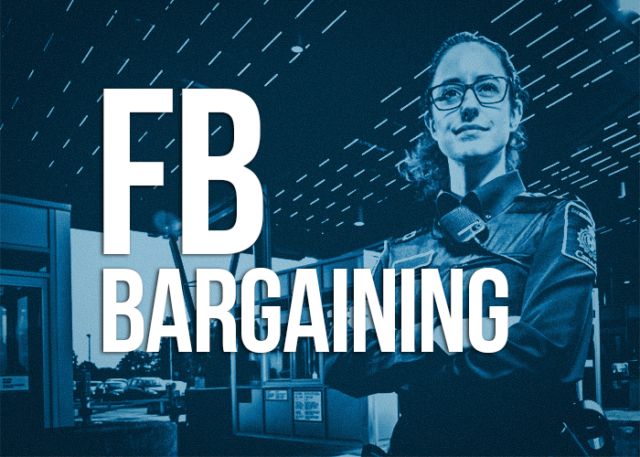
The PSAC-Customs and Immigration Union (PSAC-CIU) bargaining team representing the Border Services (FB) group made limited progress in their latest round of negotiations with Treasury Board/Canada Border Services Agency (CBSA) the week of May 13.
Over the course of the three days of negotiations, the parties discussed a number of issues. With respect to leave, the employer has proposed to make Care and Nurturing Leave (Article 41 Leave for Care of Family) “subject to operational requirements”. The bargaining team told Treasury Board that the team is not prepared to take steps backwards in this round of negotiations, and that “subject to operational requirements” at CBSA all too often means “NO”, and results in grievances. The PSAC-CIU team rejected this proposal.
However, the parties did make limited progress with respect to employees accessing Compassionate Care Leave and Caregiving Leave.
The team discussed the FB-02 situation. We have indicated to the employer that FB-02 Border Services Officers (BSOs) are effectively doing the same job as FB-03s, and are therefore being exploited as a cheap labour force. While the union and hundreds of members have filed grievances on this issue, it is the union’s position that clear language should be introduced into the collective agreement to ensure that officers are paid at the FB-03 level as soon as they leave Rigaud. CBSA has denied this proposal. The PSAC-CIU team is maintaining its position.
The team raised the issue of CBSA making changes in workplaces without obtaining the union’s consent, and that we will be consulting legal counsel concerning potential further legal action against CBSA for making unilateral changes to conditions during collective bargaining.
Negotiations are set to resume June 11-13, 2019. Dates have also been set to meet throughout the summer.
Click here to review PSAC-CIU’s package of proposals as well as those of the employer.
For more information visit psacunion.ca/fb.
The original version of this article was first posted on the PSAC website.
Original letter sent to Ralph Goodale, Minister of Public Safety and Emergency Preparedness, and Bill Blair, Minister of Border Security and Organized Crime Reduction by mail on May 13, 2019.
Dear Ministers,
This letter is in reference to the recent federal government’s announcement regarding regulatory changes surrounding the authorization – or lack thereof – for Canada Border Services Agency officers to carry their sidearm while performing their duties at airports in Canada.
To summarize what was communicated to CBSA officers on April 30, 2019:
For the past decade, the Customs and Immigration Union has been consistently vocal about the issue of federal policy preventing Border Services Officers (BSOs) from carrying their sidearm while on duty at all times, including at airports. Minister Goodale will recall my February 2017 and February 2018 letters on the subject.
In February 2018, I noted that “political intervention is required to replace the outdated CBSA and Transport Canada policies that prevent CBSA officers from carrying their sidearms at airports.” When it was announced earlier this year that a new operational solution was in the works, I was pleased to see that my point about political intervention had been taken to heart by your government, and I was hopeful that it would help remediate serious flaws in Canada’s security apparatus. Unfortunately, the announced regulatory changes are as inadequate as they are troublesome.
At first glance, the lack of clarity along with the unanticipated inclusion of time limits raise serious public safety concerns. The restrictions regarding undefined ‘short term activities’ and the imposition of arbitrary time restrictions are, to be blunt, illogical. In no way does it reflect the officers’ reality of dealing effectively and immediately with often unpredictable public safety threats.
When the public or officers are at risk, seconds matter. Having officers who are trained to use and carry a firearm operate without said firearm is a serious gap in public safety. Currently, roughly 85% of BSOs working at Canadian airports are not allowed to have their sidearm on their person, despite being trained under federal standards to do so. Instead, as you know, they are required to keep their firearm locked away. The retrieval process requires approval, which can result in unnecessary and problematic delays.
As Ministers entrusted with important security portfolios, you know better than most that, as mass population venues, airports can be subject to potentially deadly attacks. In previous correspondence with Minister Goodale, I highlighted the 2016 Atatürk Airport and Brussels Airport bombings as well as the 2017 Ft. Lauderdale airport shooting. Since then, airports and their surroundings have remained high-risk locations – the failed explosive device near the Colombo airport during the otherwise deadly series of bombings in Sri Lanka earlier this year springs to mind. In order to prevent similar tragedies from taking place on Canadian soil, law enforcement personnel, including border officers, must be able to deal immediately with any unforeseen public safety threats that could result in the loss of life.
Beyond preventing civilian casualties, it is also crucial for officers to be able to defend themselves when facing threats to their person. Just last year, in February 2018, CBSA officers at Calgary airports were confronted with an individual threatening to “blow [their] heads off” – a serious situation that I brought up to Minister Goodale at the time.
Ultimately, it remains unclear why Transport Canada’s Aviation Security Regulations allow other law enforcement agency officers to be armed while performing their duties at Canadian airports, while this government denies the same treatment to BSOs. CBSA officers should not have to rely on their fellow law enforcement colleagues for protection. As law enforcement officers, they are highly capable professionals who have received rigorous training to operate in a variety of settings, including airports. At the end of the day, this government and CBSA must ensure that their officers are always properly equipped to perform their duties in a safe and healthy environment. Given his extensive background in the law enforcement field, I am certain that Minister Blair will agree that this is common sense.
I will concede that the new policy does authorize officers to carry their sidearm in defined circumstances, and this is a welcomed step toward the formal authorization of CBSA officers being armed at airports. Unfortunately, as noted above, the policy remains vague, and its limitations mean that the situation does not appear to have changed significantly. I would also be remiss not to point out that the announced changes continue to represent a misguided use of resources. Canadian taxpayers pay for officers to undergo the use of firearm training, but due to policies such as this one, they do not reap the security benefits at airports.
In light of these observations, I trust that you will agree with me that the new policy should be revised to allow Border Services Officers to carry their full defensive equipment – including their sidearm – at all times while on duty at airports from coast to coast to coast. Doing so will only enhance Canada’s ability to ensure the safety and security of its citizens and of anyone visiting our country.
As in the past, we will be pleased to assist in any way we can to achieve this important objective.
Yours truly,
Jean-Pierre Fortin
National President
Customs and Immigration Union
Click here for the PDF version.[
OTTAWA, May 5, 2019 – The National President of the Customs and Immigration Union (CIU) has denounced as “troubling” the recent announcement by the federal government that CBSA Border Services Officers (BSO) will still not be authorized to carry their sidearm at all times while performing their duties at airports in Canada.
For years, CIU, which represents 10,500 members, most of whom are front-line border services and inland immigration enforcement officers, has been vocal about the issue of federal policy preventing border officers from carrying their sidearm while on duty. Roughly 85% of BSOs working at Canadian airports are not allowed to have their firearm on their person, despite being trained under federal standards to do so. Instead, they are required to keep their firearm locked away.
Transport Canada’s Aviation Security Regulations allow other law enforcement agency officers to be armed while performing their duties at Canadian airports, and it has been a long and constant struggle to have this situation corrected for BSOs.
For more than a decade, the union has championed to have this public safety flaw corrected. CIU National President Jean-Pierre Fortin explained why:
“Having our officers, who are trained and equipped, forced to keep their sidearms locked up is a serious gap in public safety given where they work and what they do on behalf of Canadians. This issue has become increasingly serious in recent years, as airports are mass population venues where deadly attacks have taken place throughout the world, including on North American soil. Law enforcement, including border officers, must be able to deal immediately with unforeseen public safety threats that could result in the loss of life.”
The issue was largely ignored by different governments until recently, when CIU was informed that an operational solution was on the horizon. This new solution, however, is clearly inadequate, says Jean-Pierre Fortin:
“Unfortunately, the policy announced by the federal government has serious and glaring deficiencies which will unquestionably put the safety of Canadians at risk. While the new policy does authorize officers to carry their sidearm in defined circumstances, important limitations mean that the situation has not changed significantly.”
The federal government’s plan is not entirely clear, but the following information was provided in a recent communication from CBSA President Ossowski to CBSA officers:
The lack of clarity along with the unanticipated inclusion of time limits raise serious public safety concerns for CIU National President Fortin:
“While we welcome this step toward formal authorization of CBSA officers being armed at airports, the vagueness of the new policy is both troubling and alarming. The restrictions regarding undefined ‘short term activities’ and the imposition of arbitrary time restrictions are completely illogical. Whoever came up with this concept does not understand, or care about, the officers’ reality of dealing effectively and immediately with often unpredictable public safety threats. When the public is at risk, seconds matter. Having a process that requires approval and retrieval of locked up firearms puts people’s lives in danger.”
For the National President, this policy also represents a misguided use of resources:
“Canadians need fully trained and equipped BSOs on duty. Canadian taxpayers have paid for that training, but due to shortsighted policies such as this one, they are not reaping the security benefits at airports. CIU will not rest until these issues are resolved appropriately so that the Canadian public we serve has the protections it deserves.”
The Customs and Immigration Union (CIU) is a component of the Public Service Alliance of Canada (PSAC), which represents Canada’s Front-Line Customs and Immigration Officers. CIU also represents Investigation, Intelligence and Trade Customs Officers, Immigration Inland Enforcement and Hearings Officers, Program Officers, Targeting Officers, as well as support staff – all of whom work at the Canada Border Services Agency (CBSA).
Download the PDF version of the press release.

PSAC’s bargaining teams are declaring impasse after the Liberal government failed to make substantial progress towards a new contract. Teams representing 90,000 public service workers met with government officials from April 30 to May 2.
“PSAC members are incredibly disappointed and frustrated that, after almost a year of talks, the government squandered this critical opportunity to negotiate a fair contract for public service workers before the House rises for the federal election,” said Chris Aylward, PSAC National President. “We’ve been left with no choice but to declare impasse and start the process that will lead to strike preparations.”
Rather than focusing on making quick progress at the table, the government waited two days to present what it claimed to be a comprehensive package of proposals. While some proposals, taken alone, leaned in the right direction, these were contingent on the union agreeing to unacceptable contract concessions.
After three years of the Phoenix nightmare, PSAC will not return to the table until the government shows a genuine willingness to deliver the fair deal our members deserve.
The Trudeau government’s offer of 1.5 per cent in each year of four years falls well below the rate of inflation and short of the nearly 2 per cent pay raise given to Members of Parliament on May 1. Also, the government wants workers to wait for up to 18 months after the new contract is signed to receive retroactive pay. The current retro pay implementation period is 5 months.
The government is also insisting on dissolving the existing Memorandum of Understanding on mental health (MOU) and refusing the union’s proposals to replace it with an updated framework, putting at risk years of joint progress on this issue. Moreover, the government is refusing to implement recommendations stemming from a previous child care MOU, and is resisting our proposal to allow nursing women breastfeeding breaks. These positions are at odds with the Liberals’ claimed feminist agenda and the right to breastfeed in the Canada Labour Code.
“PSAC made it clear over the last few months that this bargaining session was Trudeau’s last chance to restore a respectful relationship with public service workers—as he promised to do back in 2015,” added Aylward. “If he’s not willing to make this right before the next election, I know PSAC members won’t forget it when they head to the ballot box.”
PSAC had previously declared bargaining impasse in December, following the government’s insulting offer of a two-year wage freeze but agreed to return to the table to give Trudeau ample opportunity to make things right.
PSAC remains committed to achieving a new contract that improves work-life balance, strengthens job security, closes wage gaps with the private sector, and ensures fair economic increases.
The bargaining sessions covered four bargaining units under Treasury Board: Program & Administrative Services (PA), Technical Services (TC), Operations Services (SV), and Education & Library Science (EB).
The original version of this article was first posted on the PSAC website.
PSAC President Chris Aylward issued the following statement:
After two years of negotiations, the Liberal government has offered only 1.25 days of leave per year, for 4 years, as general compensation to every member who has fallen under the disastrous Phoenix system. PSAC could not agree to this meagre proposal.
The 1.25 days per year is far too little to compensate or even recognize the massive impact that Phoenix has had on peoples’ lives. Over 270,000 workers have been directly impacted and suffered financial losses. Many were also forced to delay career advancement, cancel parental leave, experience high levels of anxiety, reduce their support of family members, and delay retirement – to name a few of the serious adverse effects. There remains a backlog of 240,000 cases to be resolved. More than 100,000 workers are still waiting to have their last collective agreements implemented.
This offer, also contains other elements that we cannot accept, such as imposing a $1500 threshold before some claims for compensation can be filed. In addition, many members would be unfairly prevented from cashing out the leave offered due to restrictive provisions in their collective agreements.
Our members make up the bulk of the federal public service and have suffered enormous damage because of the Phoenix pay system. Yet they have kept showing up to work every day, delivering the critical services Canadians depend on. Our union will not trade in four years of our members’ pain and suffering for a settlement that does not adequately compensate for the terrible toll Phoenix has had on their lives and that of their families.
In the days and weeks ahead, PSAC will continue to negotiate with the government to secure fair compensation for our hard-working members – they deserve nothing less.
The original version of this article was first posted on the PSAC website.
After more than ten months of bargaining defined by delays, insulting offers and frustratingly slow progress towards a fair contract, PSAC’s bargaining teams are giving the government one last chance at the negotiating table. The teams, representing 90,000 workers covered by Treasury Board, will be meeting with government officials between April 30 and May 2 in Ottawa. PSAC made it clear to Prime Minister Justin Trudeau over the last few months that his window to restore a respectful relationship with public service workers—as he promised to do back in 2015 —is closing. With the fall federal election looming and the summer parliamentary recess fast approaching, substantial progress must be made at the next bargaining sessions.
Since the beginning of talks last year, PSAC has presented reasonable proposals on behalf of members to improve work-life balance, reduce precarious contract work, close wage gaps with the private sector, and ensure fair economic increases. Unfortunately, the government has been unwilling to take the steps necessary to address these concerns and has insisted on annual wage increases of only 1%, around half the rate of inflation.
Over the last few weeks, PSAC members across the country ramped up pressure on Liberal Members of Parliament to help ensure a fair contract is reached. They organized lobby meetings, rallies and sit-ins, and sent over 4,000 letters warning MPs that time is running out.
PSAC members also reminded Liberal MPs that public service workers are still waiting to be paid correctly more than three years after the flawed Phoenix pay system was launched. And they are still waiting to be compensated for all the hardships they’ve endured. These members should not have to wait any longer for the fair working conditions they deserve.
The coming sessions will cover four bargaining units under Treasury Board: Program & Administrative Services (PA), Technical Services (TC), Operations Services (SV), and Education & Library Science (EB).
The original version of this article was first posted on the PSAC website.
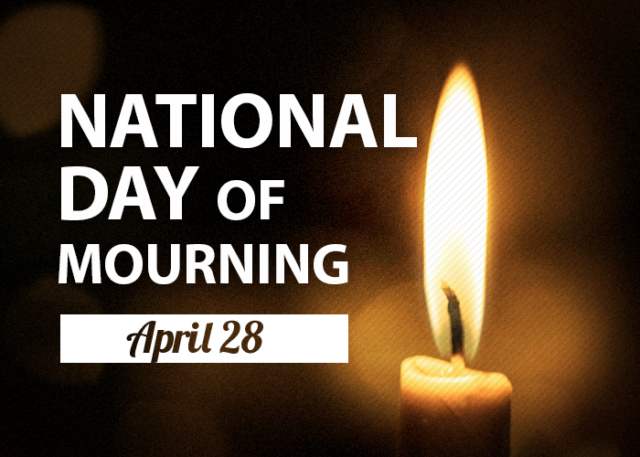
April 28 is the National Day of Mourning. On that day, we will once again remember those who lost their lives due to work-related causes. Since 1995 and in Canada alone, some 20,000 workplace deaths have occurred. Today, the National Day of Mourning is recognized in over 100 countries around the world.
CIU attaches great importance to its members’ health and safety. We must do all we can to prevent needless suffering as a result of hazardous and unhealthy working conditions and continue to promote safe working conditions for our members.
On April 28, we encourage all Customs and Immigration Union members to observe a moment of silence at 11:00 a.m., and to attend local events organized to commemorate the Day.
As the tax filing deadline quickly approaches, we know that Phoenix has made tax season extra stressful for many public service workers. PSAC has long-secured measures to help alleviate some of the tax-related financial losses caused by Phoenix pay problems.
Frequently Asked Questions: 2018 Tax Implications of Phoenix payroll issues
Public service workers impacted by Phoenix can reach out to tax experts to help determine if there are errors on their T4s and determine whether there are tax implications for those errors. Members can be reimbursed for this tax advice up to $200 per year (taxes included).
To file a claim, complete this online form.
More information can be found at Claims for expenses and financial losses due to Phoenix: reimbursement for tax advice.
Those who have been impacted by Phoenix may also be facing financial loss due to the incorrect reporting of their salaries. Often this is due to:
To find out if you are eligible to be reimbursed for these types of financial losses, go to Claims for expenses and financial losses due to Phoenix: Claim for impacts to income taxes and government benefits.
Anyone who has been financially impacted by Phoenix, tax-related or not, may also be eligible to claim out-of-pocket expenses. Out-of-pocket expenses include things like penalty fees, interest charges, or NSF (non-sufficient funds) charges.
Visit Additional Financial Expenses Incurred Because of Phoenix Pay System Errors to get more information and fill out the claim form.
The original version of this article was first posted on the PSAC website.