16 Days of Activism against gender-based violence 2024

The 16 Days of Activism campaign runs each year from November 25 to December 10 and calls attention to the needs for action to put an end to gender-based violence against women and girls.

As part of this international campaign, the federal government’s theme for this year is Come Together, Act Now. As per the government, the theme “emphasizes how crucial it is to involve everyone in Canada – particularly men and boys – in changing social norms, attitudes and behaviours that contribute to gender-based violence. It is also a call to action urging all of us to recognize the signs of gender-based violence and to reach out for support, for ourselves or loved ones.”

We invite all our members to take a look at the federal government’s campaign page for ways to get involved as part of the 16 Days of Activism. Be sure to also check out the related United Nations campaign UNiTE. Led by UN Women, this initiative “was created to support the civil society led 16 Days of Activism against Gender-based Violence campaign around the world.” The UNiTE theme for this year is “Every 10 Minutes, a woman is killed. #NoExcuse. UNiTE to End Violence against Women”. Read more about UNiTE here.

Honouring Trans Day of Remembrance: Standing Together Against Hate

On November 20, we mark Trans Day of Remembrance, an occasion to honour the lives of trans people around the world, and those we have lost to violence and discrimination.

Although Canada has legal protections for gender identity and expression, transphobia is on the rise. Trans people face greater rates of violence, as well as greater barriers to employment and healthcare, which is now made worse by anti-trans laws in Saskatchewan, New Brunswick and Alberta.

Not only do these laws harm trans people by limiting their ability to actively participate in society, they embolden people to act in discriminatory and violent ways, which has a very serious impact on the safety, mental health and well-being of trans people. In fact, a recent study found that transgender people in Canada are three times more likely to experience depression, anxiety and other mental disorders compared to cisgender people. Even worse, they are six times more likely to have attempted suicide in their life. We must fight against transphobia and anti-trans legislation to ensure that all trans people have access to mental and health care services so they can have full, thriving lives.

These anti-trans laws also fuel misinformation. Harmful myths about trans people — whether it be about sports or accessing gender affirming care — are often spread without evidence or care for the impact this has on trans people.

What you can do

On this Trans Day of Remembrance, let’s honour the lives lost, while recommitting ourselves to building a world where trans people can live safely and authentically.

Let’s take time to fact-check information, seek credible sources, and amplify voices from the trans community who can speak on their realities. Let’s create a more inclusive society, rooted in respect and understanding.

Like every year, vigils will be held across Canada. Attending these events is a powerful way to show your support and connect with others to help end anti-trans violence.

Together, we can create a future where trans rights are not only protected but celebrated. Let’s ensure that the lives we lost inspire meaningful action.

Here are just some of the locations hosting vigils happening across the country:

British-Columbia

Victoria; Vancouver

North

Whiteworse; Yellowknife

Prairies

Edmonton; Calgary; Saskatoon; Winnipeg

Ontario

Toronto; Ottawa

Quebec

Québec City; Montreal

Atlantic

Saint-John; Fredericton; Halifax; Charlottetown; St. John’s

This article was first posted on the PSAC website.

Treasury Board National Bargaining Conference: members of equity groups, women and young worker encouraged to apply

bargaining-pattern_psac

The Treasury Board PA, TC, SV and EB collective agreements will expire in 2025.

  • Program and Administrative (PA) group expiry date: June 20, 2025
  • Technical Services (TC) group expiry date: June 21, 2025
  • Operational Services (SV) group expiry date: August 04, 2025
  • Education and Library (EB) group expiry date: June 30, 2025

In preparation for the next round of bargaining, PSAC will host a bargaining conference for PA, TC, SV, and EB group members on February 19-23, 2025, in Montréal.

The conference will bring members together to review, discuss, and prioritize issues for bargaining with Treasury Board. Conference delegates will also be electing their bargaining team.

PSAC is issuing a call-out for equity group members to attend the Treasury Board national bargaining conference.

The participation of all groups in collective bargaining is critical and we encourage equity group members – Indigenous, racialized, 2SLGBTQIA+, Access (members with disabilities), women and young workers (35 years old or younger) – to participate.

  • Applicants must be a member of the PA, TC, SV, or EB bargaining unit as well as hold union office and demonstrate evidence of union activism.

Please submit your application before December 16 to be considered for the upcoming bargaining conference.

This article was first posted on the PSAC website.

“An incredibly misguided decision”: Union calls on CBSA to reverse service hours cuts at land border ports of entry across Canada

Ottawa, November 19, 2024 – The Customs and Immigration Union (CIU), which represents Canada Border Services Agency (CBSA) officers and personnel across the country, is calling upon CBSA to immediately reverse its misguided decision to reduce hours of service at land ports of entry in New Brunswick, Quebec, Manitoba, Saskatchewan, Alberta, and British Columbia.  

On November 18, 2024, CBSA announced that it was reducing hours of service for more than a quarter of its land ports of entry, allegedly to boost security and align with United States border crossings operational hours. “This is an incredibly misguided decision” said CIU National President Mark Weber in response to the Agency’s announcement, which came with little advanced notice to the union and CBSA employees. “At a time when all eyes are on the border, given the potential impact of the recent American presidential election, it is beyond shortsighted for the Agency to proceed with this reduction of service. To claim that the border is more secure with ports closed more often is like saying that up is down — it’s nonsense” added the union president. 

The union is disappointed to see that the Agency is once again making changes without consulting the frontline officers who work at the affected border crossings. Worse, CBSA does not appear to have consulted border communities at all, despite the significant impact of this reduction in hours of service on families and local businesses.  

Affected ports will see their operational hours slashed as of January 6, 2025, in some cases going from operating around the clock to only being opened for 12 hours,” said the CIU National President. For communities that straddle the border — many of them rural — such changes can be far-reaching, as both the Canadian and American sides are dependent on each other for critical services, employment, and industry.   

With ports closing earlier, residents and commercial operators will have to travel further early in the morning, in the evening and at night — sometimes over long distances. Industrial sectors such as agriculture and forestry will certainly be impacted. Some of the affected ports also play an important role in connecting Canada to large U.S. metropolitan areas, such as Boston and Denver.  

This is not the first time that the Agency has sought to reduce hours of service at land ports,” said Mark Weber, “and the end result is that it makes the border both less secure and less functional. We really need the government to properly invest in the border to ensure it is adequately staffed, so our members can continue to serve Canadians and protect our communities. Reducing hours of service certainly does not help to achieve this. 

CIU members supports CUPW on the picket line

As Canada Post workers from the Canadian Union of Postal Workers (CUPW) begin their strike for fair wages and fair working conditions, CIU members joined picket lines from coast to coast to show support with striking CUPW members.

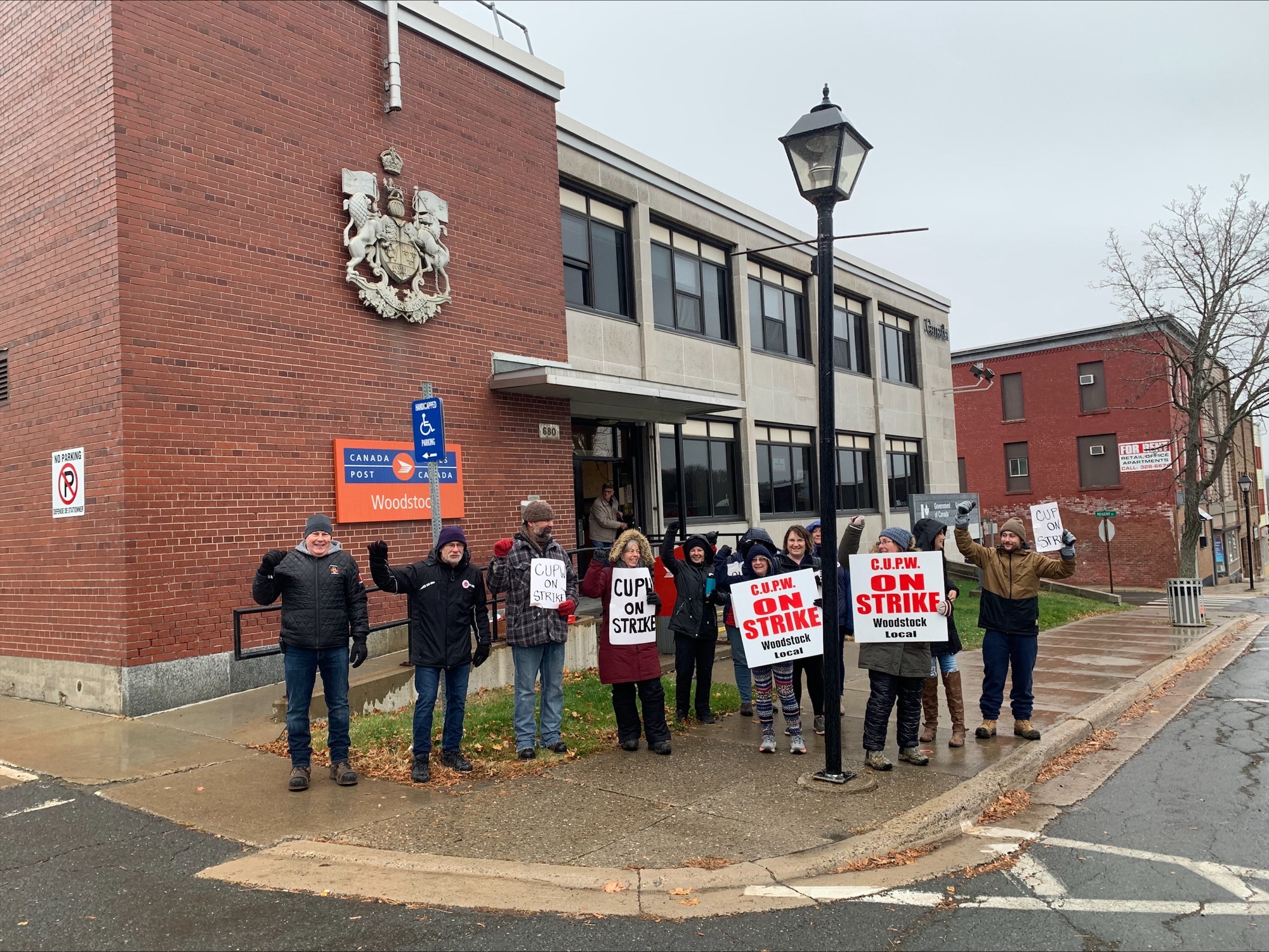
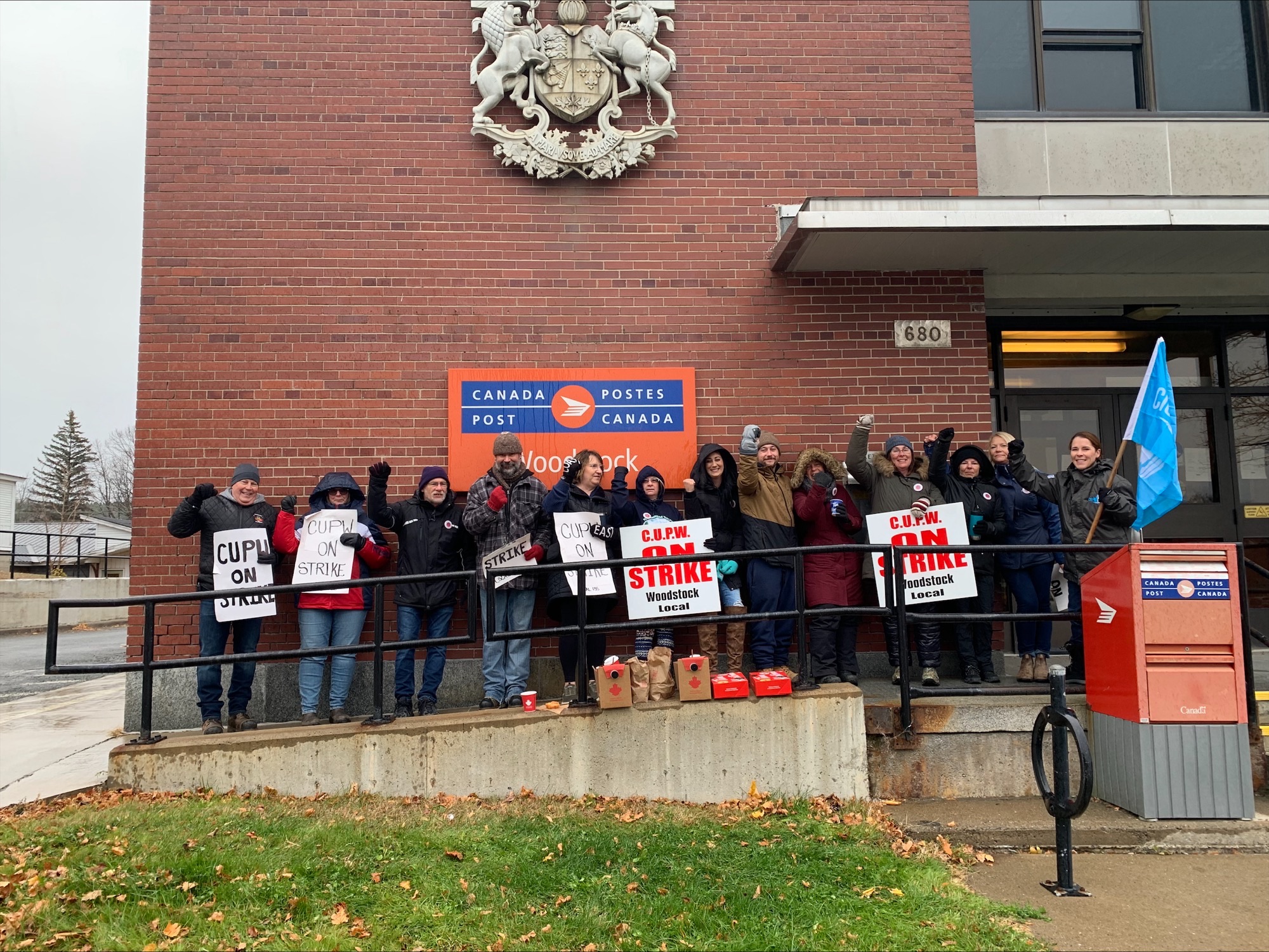
In New Brunswick, CIU NB-PEI Branch President Marjorie Gavel stopped by the picket line in Woodstock earlier today to show solidarity with striking workers (and drop off muffins, donuts and coffee!). Despite the cold and the damp, spirits were high.

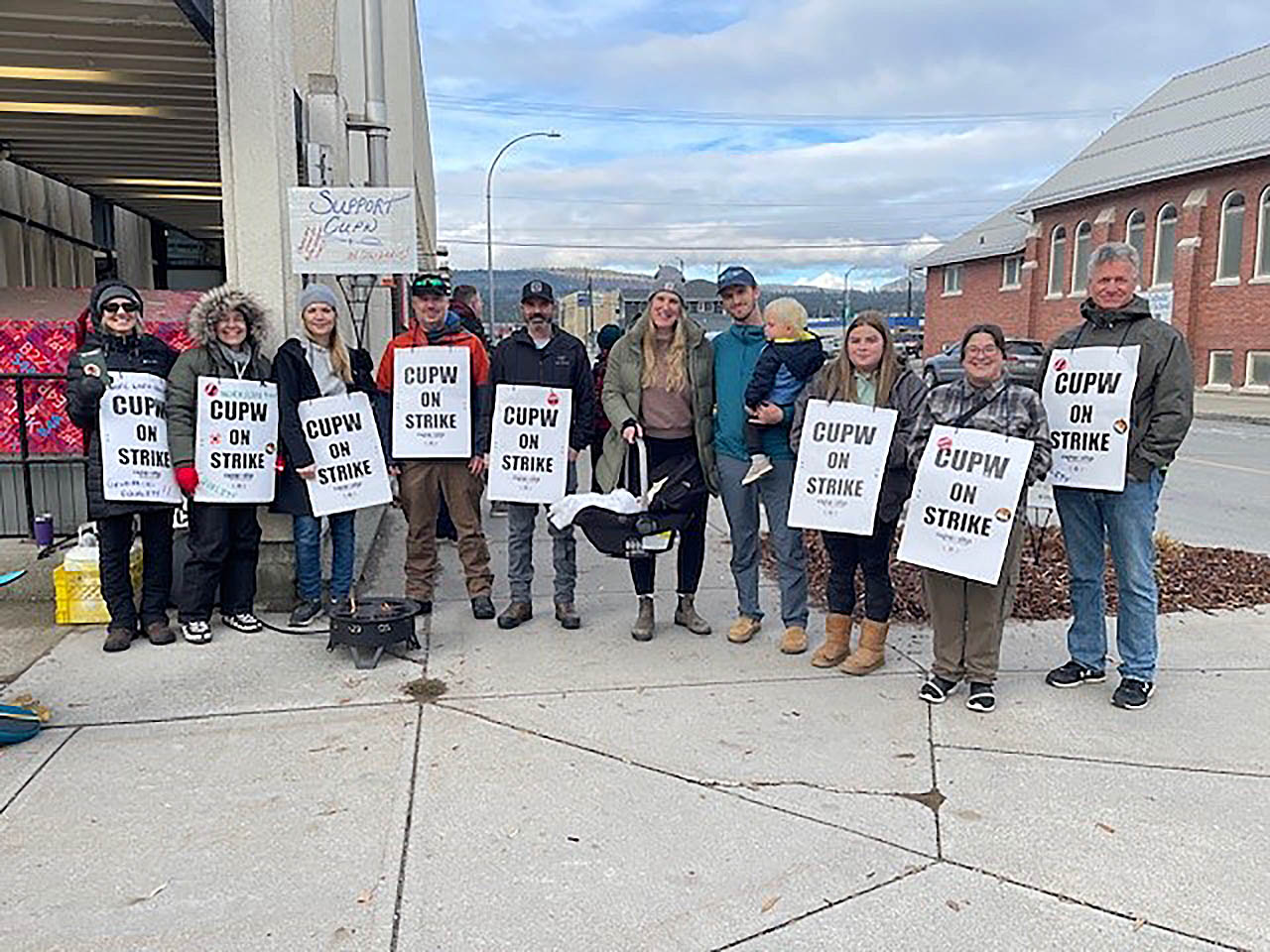
In British Columbia, CIU Young Worker Representative Kevin Kerr, along with his family, dropped by the CUPW local 728 picket line in Cranbrook to show support.

Support CUPW

While CIU members are not in a legal strike position, you can support CUPW members by joining picket lines during unpaid breaks and before/after your work day (FB members, please remember not to attend while wearing your uniform and tools). Let’s show solidarity with postal workers!

Solidarity with Canada Post workers at CUPW: A message from the PSAC National President

PSAC logo SCFP
PSAC logo SCFP

Canada Post workers from the Canadian Union of Postal Workers (CUPW) need your solidarity.

Fair wages, improved health and safety, sound pensions, and increased staffing are on the bargaining table. But their employer hasn’t offered real solutions.

On Tuesday, CUPW served a 72-hour strike notice to Canada Post. Canada Post workers at CUPW will be in a position to strike this Friday, November 15, 2024.

As a PSAC member, you are not in a legal strike position, and you must continue to report for duty. Here’s what to do in the event of a CUPW strike:

  • Continue showing up to work. You will still have access to your workplace even if you’re in areas where CUPW has established picket lines.
  • During your lunch breaks, and before or after your work day, join the picket lines to express solidarity with CUPW members.
  • If you feel it is unsafe to cross the picket line, contact your supervisor and union representative.
  • Make note of the entry points at your workplace for PSAC members. A CUPW picket captain will specify.

When PSAC members were on strike against Treasury Board, our CUPW colleagues joined us on the line. Now it’s our turn to show solidarity.

In solidarity,

Sharon DeSousa
PSAC National President

Canada’s public services at risk: PSAC pushes back against cuts

PSAC logo SCFP
PSAC logo SCFP

PSAC has serious concerns about the federal government’s plans to reduce government spending by cutting public service jobs.

Without prior consultation, the government unilaterally announced their plans to cut costs across the federal public service during a briefing with unions on the Refocusing Government Spending Initiative November 7.

The 2023 budget outlined $15 billion in cuts to programs and services over the next four years, with another $3 billion in spending reductions announced in last year’s Fall Economic Statement.

When cuts were first announced in 2022, Mona Fortier, Treasury Board President at the time, said the government would find $6 billion in savings by increasing remote work and selling off real estate.

Last year, Treasury Board President Anita Anand promised workers wouldn’t be asked to do more with less and that there would be no job losses.  Then we heard that 5,000 jobs would be reduced through natural attrition.

Today, we heard a very different story. The government is now widening the net, looking to cut term and casual employees, and opening the door for departments to slash permanent employees through Workforce Adjustment.

Federal departments have been assigned specific budget reduction targets in salary line items. PSAC is insisting that unions must be consulted while these targets are reviewed. These targets, protected under Cabinet privilege, will remain confidential until they are made public in June 2025.

Workers and Canadians are waiting in limbo. Families who benefit from critical programs won’t know if the services they depend on will be cut. Public service workers won’t know if they’ll have jobs by next summer – if they can renew their mortgage, start a family or pay their student loans.

Government savings should not fall on the backs of workers and the services they deliver to Canadians.

The government should instead go after the billions they’re wasting on contracting out public services and the massive savings remote work offers for Canada’s public service.

PSAC will be fighting back against these cuts and protecting workers caught in the crossfire.

This article was first posted on the PSAC website.

Remembrance Day 2024

poppies flowers field landscape countryside

On November 11, we remember and honour the thousands of women and men who have laid down their lives for our country.

Remembrance Day presents us with an opportunity not only to recognize the dedication and sacrifices — past and present — of Canadians of all horizons, but also to reflect on how to build a better, fairer world where such sacrifices may no longer be necessary. To the women and men who have demonstrated courage and commitment in the face of adversity, we thank you.

In honour of all who have served, CIU will be half-masting the National Flag of Canada flying at the CIU National Office, in Ottawa.

Statement on incident at Ambassador Bridge

The Customs and Immigration Union is aware of the tragic incident that took place earlier today (November 9) in Windsor, where a border officer took their life at work. We wish to express our most sincere condolences to the family, friends and colleagues of the deceased — our thoughts are with all who are affected by these difficult circumstances.

Incidents such as this one bring to light the challenges public safety personnel may be confronted with throughout their career, and they remind us of the need for a comprehensive mental health support structure and of the importance of taking down barriers to access these services, both in professional and private settings. These tragedies also serve as a reminder of the value of supporting each other in the face of hardship. The death of a member is difficult for all, and we recognize the impact this sad event has on our community — should any member require support, please contact the Employee Assistance Program (EAP) at 1.877.367.0809 (TTY: 1.877.338.0275) for confidential assistance.

Out of respect for the deceased and their family, CIU will not be commenting further at this time.


PSAC and TBS complete joint study on mental health support mechanisms in the federal workforce

PSAC logo SCFP
PSAC logo SCFP

Workplace mental health directly impacts employee well-being, productivity, and overall organizational success and is a crucial factor in creating a supportive, sustainable, and productive work environment.

The Public Service Alliance of Canada (PSAC) and the Treasury Board of Canada Secretariat (TBS) are pleased to release the Joint Study on Mental Health Support Mechanisms for Employees, which is focused on improving mental health support for federal employees. The study explores how exposure to workplace trauma—whether directly or indirectly—can impact mental well-being and offers solutions to address these challenges.

Background

The study follows an agreement reached in October 2020 during collective bargaining with the Program and Administrative Services and Technical Services groups. Its goal was to identify roles that expose workers to explicit, disturbing material or potentially dangerous situations and determine how best to support these workers.

The study aims to:

  • Enhance understanding of how to support workers at risk of psychological harm.
  • Minimize the risks of trauma exposure in the workplace.
  • Identify the specific mental health support workers need.
  • Highlight best practices and recommend ways to implement them across departments.

Collaboration and process

The Joint Committee on Mental Health Support Mechanisms, made up of union and employer representatives, co-chaired by members of both parties, conducted the study. Their collaborative work shows how unions and employers can join forces to improve workplace mental health.

In the course of their work the committee

  • Gathered evidence to develop criteria to identify high-risk roles across departments.
  • Assessed current mental health programs and identified gaps.
  • Reviewed existing literature on trauma-related mental health support.

Findings and recommendations

The study found that, although mental health resources are available, it’s unclear how frequently they are used or how effective they are. It also highlighted the need for better systems to identify psychological risks in the workplace.

The report emphasizes the need to:

  • Equip workers and managers with mental health knowledge to identify risks.
  • Strengthen informal peer support networks.
  • Provide recovery options for affected employees.

It also recommends that employees and managers participate in joint training. This approach helps build stronger peer networks and improves engagement, with managers playing a key role in program success.

Looking ahead

The study offers a framework for departments to improve their mental health action plans, which ultimately will benefit the entire federal workforce.

Union and management representatives on Occupational Health and Safety Committees are encouraged to use the study as a guide and take steps to apply its recommendations.

This article was first posted on the PSAC website.