2025 Laurel Randle Memorial Bursary recipient

Congratulations to Mia Novakovic, who has been selected as the recipient of the 2025 Laurel Randle Memorial Bursary! Mia is the child of CIU member Francine Mwamba, from the Headquarters Branch. The winning essay demonstrated a definite understanding of Laurel’s values — dedication to social justice and union activism — and provided clear insight in an original and creative fashion. Well done, Mia!

In total, fourteen submissions were received prior to the July 31 deadline. Thank you to all who participated! The application process for the 2026 bursary will open in the spring.

‘We’re inundated with managers’: Announcing our first winners!

We’re pleased to announce the winners of the September round of our ‘We’re inundated with managers’ contest.

Congratulations to Tamara McLean from Windsor, who won in the ‘absurdity of the employees/management ratio’ category! She writes: While working one shift, I noticed that we seemed to have a lot of managers on. There were a total of thirteen managers and only eleven officers to run a day shift.

And congratulations to Catherine Thouin from Lacolle, who won in the ‘originality of the submission’ category. She writes: “I’ll always remember: There were six superintendents that day. Two administrative superintendents and four operational superintendents. No surge capacity, no crisis on the horizon. There were eight of us border service officers, handling about ten cases.” It certainly paints a picture!

We’ll be announcing the winners for the month of October in early November (previous submissions will also be considered, so no need to resubmit them).

‘An injury to one is an injury to all’: CIU Board members send clear message to CBSA

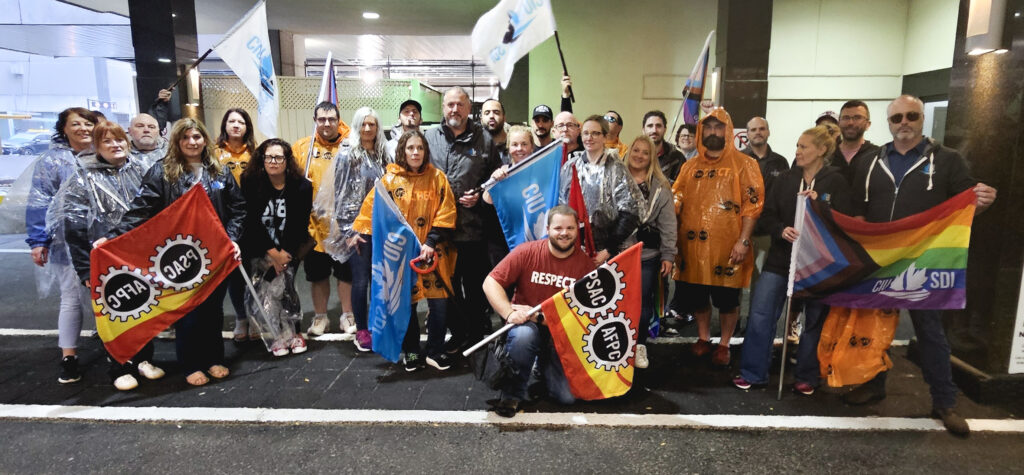
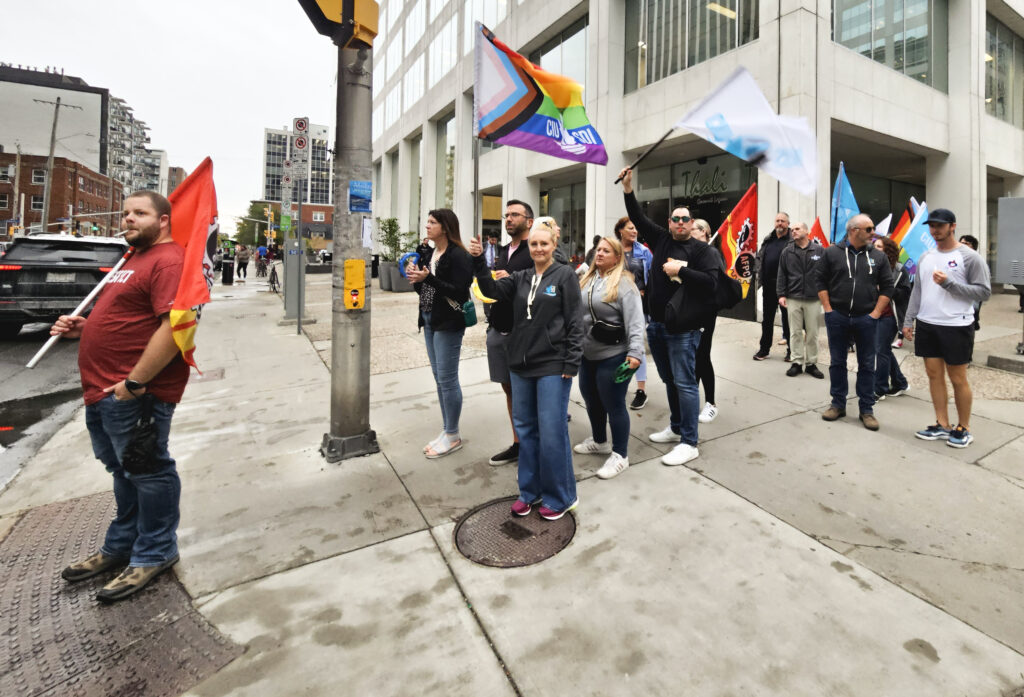
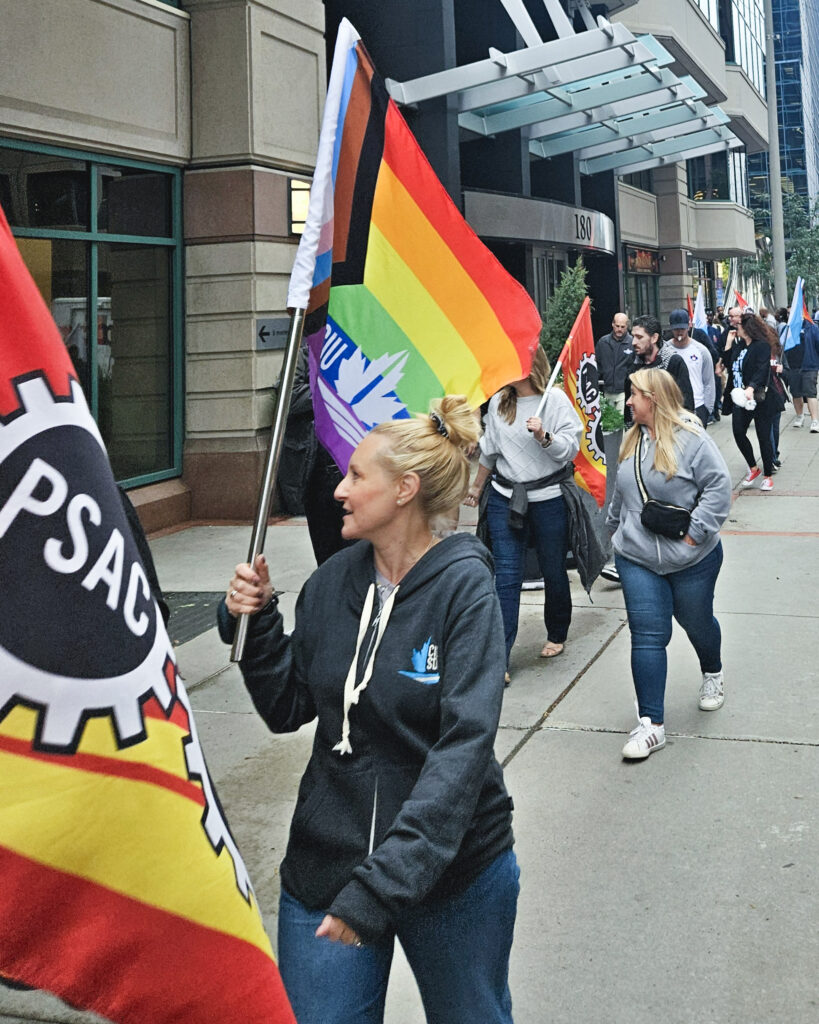
At the same time as the CIU National President was bringing CBSA’s ‘un-Canadian’ way of treating accommodated officers to the attention of the Standing Committee on Public Safety and National Security, the CIU National Board of Directors was rallying in front of CBSA’s offices in Ottawa to send the employer a clear message: An injury to one is an injury to all, and CBSA’s attempt to do a blanket review of existing accommodation to push out trained, experienced officers will not stand.

An update on the policy grievance

Given the potential impact of CBSA’s review of accommodation agreements on our accommodated members, CIU is exploring all avenues to protect our members’ rights and ensure the employer meets its legal obligations. A policy grievance has  been filed, challenging the employer’s unwarranted wholesale approach. We will make sure to update you as the case progresses.

See photos of the rally below!

‘More is needed’ to better manage our borders: Mark Weber speaks to the Standing Committee on Public Safety and National Security

As one of the first witnesses invited to testify as part of the Standing Committee on Public Safety and National Security (SECU)’s study on the management of the Canada-United States border, Mark Weber was categorical: While the government’s commitment to hire an additional 1,000 border services officers is a ‘strong start’ towards reinforcing our border infrastructure, more is needed.

“Canada must invest in the people who protect our frontline. We need to allow our frontline border officers to fulfill their full legal mandate, we need to invest in CBSA’s training infrastructure to ensure we can continue to meet future challenges head-on both at and away from the frontline, and we need a border services agency that is equipped to properly manage itself so it can better manage the border” told the CIU National President to the Committee.

Answering questions from Committee members, Mark Weber also stressed the need for those 1,000 officers to be fully trained frontline officers, raising concerns that the Agency might seek to download important duties on newly created FB-01 positions, who would end up doing the work of full-fledged FB-03 frontline officers.

An ‘un-Canadian’ way of treating accommodated officers

The National President also took time to bring the Committee’s attention to CBSA’s decision to perform a blanket review of accommodation agreements across the country, which appears to be designed to push out trained officers who, while they cannot carry firearms, bring valuable law enforcement experience.

“[CBSA is] telling them ‘you’re going to self demote or we’re going to show you the door’. In many instances these are people who’ve injured themselves on the job” explained Mark Weber, adding that the Agency was essentially signaling that employees were ‘a slip or fall away’ from their employer pushing them out. “It’s a horrendous way to treat people. I would almost say it’s un-Canadian.”

See selected clips below. A full recording of the Committee proceedings can be viewed here (with interpretation language options).

The New Union Frontier, Episode 2: Rick Savage

The second episode of The New Union Frontier is now live! Our host Amanda sits down with First National Vice-President Rick Savage to talk union business, health and safety, and more! Go to ciu-sdi.ca/podcast to listen now!

National Day for Truth and Reconciliation: Federal cuts threaten justice for Indigenous Peoples

On National Day for Truth and Reconciliation September 30, we remember that the harm caused by residential schools is still felt by First Nations, Inuit, and Métis communities. The trauma endures –and so should our resolve in seeking justice and dignity for First Nations, Inuit, and Métis peoples.

The true promise of reconciliation is not only healing from the past, but delivering equitable access to housing, health care, education, and safe workplaces for all Indigenous Peoples. Only then will Canada fulfill its commitment to justice and dignity for First Nations, Inuit, and Métis peoples.

Harmful cuts to Indigenous services

The federal government’s looming budget cuts threaten any progress towards reconciliation. Prime Minister Carney’s plan to reduce federal department budgets by up to 15% over three years will hit Indigenous Services Canada (ISC) especially hard, leading to billions in cuts and further shrinking its capacity to deliver essential programs and services for First Nations, Inuit, and Métis peoples.

The loss of funding to Jordan’s Principle and the Non-Insured Health Benefits (NIHB) program is already forcing painful trade-offs. Children with complex needs are losing teaching assistants in classrooms. Speech therapy, counselling, and specialized health care are harder to access. Parents have been left scrambling to find basic care while trying to keep their children safe and supported.

The damage goes beyond individual families. In many northern and remote communities, every lost job means slower emergency response, longer waits for medical attention, and fewer safe places for youth to learn and thrive. These cuts undo years of hard-fought progress – progress that was beginning to close the gap for many Indigenous students and families.

Without urgent action, inequalities facing Indigenous communities will only deepen. This is not just about cutting costs. It’s about health, opportunity, and equality for generations to come.

 Engage in local and national events

This National Day for Truth and Reconciliation and beyond, PSAC encourages you to learn more about the importance of well-funded public services in Indigenous communities, speak out against harmful cuts, and let your Member of Parliament know that equitable and high-quality public services for Indigenous communities must be a national priority.

In a letter to Minister Mandy Gull-Masty at Indigenous Services Canada, PSAC has called on the government to reverse its planned cuts to essential Indigenous services and support ongoing investments in Indigenous-led programs – because without these, there can be no path to reconciliation.

This article was first published on the PSAC website.

48th Annual Canadian Police and Peace Officers’ Memorial Service

Honouring the brave officers who lost their lives in the line of duty, the 48th Annual Canadian Police and Peace Officers’ Memorial Service will be taking place on Sunday, September 28, 2025, on Parliament Hill, in Ottawa.

To commemorate this important day, the Canadian flag will be lowered at half-mast at the CIU National Office, in Ottawa.

For more information on the Memorial Service, please visit the following page.

Introducing the new CIU online boutique!

Ever wanted your own custom CIU t-shirt or jacket? The Customs and Immigration Union has partnered with Cavan Advertising to launch the new CIU online boutique, your one-stop shop for a wide variety of Canadian and union-made CIU-branded apparel. Check it out now at union-store.com/ciu-sdi/!

 Visit the CIU boutique

Questions about the boutique? Make sure to consult the store FAQ. For any questions about special orders and items availability, please contact Cavan directly.

Treasury Board bargaining: Government tries to remove workforce adjustment from contracts

As the government moves ahead with plans to cut tens of thousands of federal public service jobs, Treasury Board has tabled a proposal that would strip workers of the power to negotiate improvements to the workforce adjustment process.

During negotiations with PA, EB, TC, and SV groups from September 10 to 18, Treasury Board proposed removing the Workforce Adjustment Appendix (WFAA) from the collective agreements of more than 155,000 PSAC members.

If that happened, members would only be covered by the National Joint Council (NJC) Work Force Adjustment Directive. Unlike collective bargaining, the NJC process doesn’t let members negotiate improvements directly or vote on job security language.

Why this matters

The strongest improvements to workforce adjustment have always come from PSAC members fighting for them at the table. That’s why PSAC enshrined workforce adjustment in our contracts in 1998 — and why we’ve strengthened these protections every round since.

This round, our bargaining teams will be tabling proposals to apply equitable seniority in determining layoffs, reduce involuntary relocations, maximize employment opportunities through telework as an alternative to relocation, and more.

With sweeping job cuts on the horizon, workers need stronger job security — not weaker. PSAC will continue fighting to improve these vital protections.

Group-specific updates

  • EB group: Treasury Board wasn’t prepared to engage meaningfully with the team — delaying discussions and admitting they don’t yet have a mandate. At the same time, they said they’re still costing and assessing our proposals. While we have concerns about the employer’s approach, it’s still early and the bigger picture of these negotiations has yet to emerge.
  • PA group: We tabled our proposal on injury-on-duty leave and challenged the employer’s concessions that would negatively impact equity-deserving groups. It’s clear the employer is targeting the hours of work protection for IS employees, but our team will fight back.
  • SV group: We tabled proposals on compassionate care leave, statement of duties, and compensatory leave. The employer presented us with proposals on union leave, implementation, pay simplification, and work force adjustment. We expressed our concern with several of their proposals that would cut back on allowances and premiums, including overtime and the HVAC allowance.
  • TC group: The employer tabled concessions that would remove recourse for late implementation of the collective agreement and put up barriers for union activities. They also proposed changes to simplify pay rules under the new pay system that raised serious concerns for shift workers. We tabled improvements to caregiving leave and pushed back against the employer’s concessions.

The next bargaining dates are scheduled for October 22-23 for PA and SV, and October 29-30 for TC and EB.

Stay connected

Make sure you’re on our mailing list to receive the latest bargaining updates as they happen.

This article was first published on the PSAC website.

Pay Equity: PSAC continues the fight for equal pay

Today, we honour the hard-fought progress women in Canada have made toward achieving gender equality. September 18 is International Equal Pay Day—a powerful reminder that while women have made significant progress throughout Canada’s history, the fight for equal pay is far from over.

PSAC is committed to ensuring that Prime Minister Carney’s government makes achieving gender equality a priority, because it is long overdue for Canada.

Women’s participation in the workforce accounts for a third of Canada’s economic growth over the past 40 years. Despite this, women in Canada still earn 89 cents for every dollar earned by men for equal work. For Indigenous women, racialized women, women with disabilities and other equity-deserving groups, this gap is even wider.

PSAC has always been unrelenting in the fight for gender equality and for securing equal pay for women. In 1980, 10,000 PSAC members in clerical and regulatory jobs – largely held by women – fought for and won wage increases. We know that groundbreaking victories like this are only made possible through the power of collective action.

Now, we must fight harder than ever. The Carney government confirmed that their upcoming budget will be one of austerity. Canada is at risk of losing years of critical progress made in pay equity and gender equality.

The budget could include damaging cuts that will leave women worse off across Canada. Implementation of the Pay Equity Act could stall altogether, negatively impacting nearly 1.3 million working women in Canada. Also, with an estimated 80 per cent cut to Women and Gender Equality Canada, millions of additional women will be worse off from no longer being able to access critical services and funding dedicated to improving gender equality.

The projected cuts could surpass those of the Harper era and rival the cuts of the Chrétien government. We cannot risk going back to the austerity of 1995. This goes beyond Canada’s commitment to achieving the United Nations Sustainable Development Goals by 2030.

This is about building a better, more inclusive Canada for decades to come. Investing in women means investing in a stronger Canada. We can’t wait five generations to achieve gender parity. We need action now.

This article was first published on the PSAC website.