FB bargaining team pushes for ’25 and out’ retirement, rejects concessions at table

Our PSAC-CIU bargaining team representing the Border Services (FB) group rejected concessions to job security and again pushed for ’25 and out’ retirement during negotiations with Treasury Board/Canada Border Services Agency (CBSA) the week of June 10.

Our bargaining team is frustrated that the employer is still unwilling to make meaningful progress on a number of core issues, including fairly compensating new officers (FB-02s), ’25 and out’ retirement and revamping the grievance procedure.

Pension Reform

We have made considerable progress over the past two rounds in our fight for parity with the broader law enforcement community. This week, we reiterated the need for pension reform for union members in the FB group. We are demanding a commitment from Treasury Board in support of pension reform. PSAC-CIU will also be undertaking other initiatives to push pension reform for the FB group during the coming election campaign.

Job Security

Treasury Board has made proposals to undermine the job security language in our contract contained in the Workforce Adjustment Appendix. We rejected the employer’s proposal and instead reiterated our proposals to enhance protections for union members.

We also raised the issue of students being used to undermine our work and public safety. We have made proposals to deal with student-related issues in the workplace.

Grievance Procedure

We’ve tabled demands to streamline the grievance process. There is no need to meet with Chiefs and Superintendents if Ottawa is making the decisions. We should be dealing with the source.

Fairly compensate new officers (FB-02s)

We again stated that Border Services Officers (BSOs), upon completion of their training at Rigaud, should be made FB-03s and compensated accordingly. The FB-02 classification is being used to exploit new officers. They wear the badge. They wear the uniform. They make the decisions. They deserve to be paid and treated accordingly.

Telework

After years of raising the issue of telework access for Trade Compliance Officers and other non-uniformed staff, the CBSA has announced a policy on telework. However, its application is unclear. We reiterated the need for there to be language in the contract on this issue.

We are scheduled to return to the bargaining table July 30 to August 1.

To review the package of proposals that we tabled and those of the employer, go to psacunion.ca/fb. We’ll be sure to provide updates as bargaining progresses.

The original version of this article was first posted on the PSAC website.

PA, EB, TC & SV bargaining: strike timeline

Bargaining

The Labour Board has set dates for Public Interest Commission (PIC) hearings for four Treasury Board bargaining tables:

Once a hearing has taken place, a PIC report is generally issued within 30 days. After the reports are issued, each bargaining unit will be in a position to strike if members vote to walk off the job. 

The PIC process began when bargaining reached an impasse in May.

In negotiations, the government insisted on a wage cut once inflation is factored in as well as a waiting period of up to 18 months after contract signing for retro pay. At the same time, the government rejected our proposals to improve working conditions by:

  • implementing market adjustments where pay discrepancies exist;
  • providing a full top-up for the new 18-month parental leave option;
  • reducing contracting-out and precarious work in the public service; and
  • better addressing mental health in the workplace.

What is a Public Interest Commission (PIC)?

By law, once impasse is reached, a PIC is established to help the parties reach an agreement. The PIC is a panel of three people – a chairperson appointed by the Labour Board and nominees appointed by the union and management. The union and the employer submit briefs and explain their positions on the outstanding issues at a hearing with the PIC. The PIC then issues a report with recommendations for settlement. The recommendations are not binding.

Once the PIC releases its report, PSAC bargaining teams will reconvene to discuss the recommendations. Typically, PSAC’s teams and government representatives then return to the table to resume negotiations.

Will we strike?

Regardless of which party forms government after the fall federal election, PSAC will continue pressing for a fair deal that addresses members’ demands. However, if PSAC and the government are still unable to reach an agreement after the PIC reports are issued, members will have the opportunity to take a strike vote.  

History has taught us that the best way to avoid strikes is to prepare for one. Therefore, PSAC will ensure that strike training is offered to members in the coming months.

PSAC will also provide updates on the PIC process and other bargaining developments as appropriate.

The original version of this article was first posted on the PSAC website.

FB bargaining team striving to make CBSA a better place to work

Our PSAC-Customs and Immigration Union (PSAC-CIU) bargaining team raised issues around vacation leave, medical notes, student workers and firearm practice time during negotiations with Treasury Board/Canada Border Services Agency (CBSA) July 30 to August 1.

The team also reached an agreement to fairly compensate CBSA dog handlers.

Other key issues discussed at the table include:

Protections from CBSA Management

We continue to raise problems related to CBSA management culture and CBSA’s dealings with employees. In addition to proposals we’ve made concerning new protections in the context of discipline, abuse of authority and harassment, our team spoke again this week to our proposal to ensure whistleblowing protections are in place for PSAC/CIU members in the event of CBSA wrongdoing.

Paid Leave

Our team addressed the need for us to achieve improved leave and work-life balance. Most ports are understaffed, and overtime use is rampant. We have proposed an increase in annual leave to match what RCMP constables are afforded. We also raised issues related to access to leave with income averaging (LWIA).

Medical Notes

There is no clear policy with respect to employees being required to provide medical notes. CBSA managers often require employees to provide medical notes based on subjective criteria. Our position is that if management wants a medical note, they can pay for the costs associated with obtaining it.

Firearm Practice Time

Our team is demanding that officers be provided paid time for firearm practice, consistent with the Agency’s previous practice.

Student workers

We again raised the issue of students working at airports. In several locations across the country, students are being employed as a cheap labour force and undermining both the safety and security of Canadians and our collective agreement rights. Our proposals in bargaining regarding student use would rectify these issues.

Dog Handlers, grievance procedure, telework

We continued this week to push for language that would streamline the grievance process, and to provide better access to telework options for non-uniformed personnel. We also raised and resolved issues with CBSA management with respect to compensation for officers with dog-handling responsibilities.

We are scheduled to return to the bargaining table in September.

To review the package of proposals that we tabled and those of the employer, go to: psacunion.ca/fb. We’ll be sure to provide updates as things progress.

We stand tall for law enforcement

Together as FBs, we’ve achieved incredible victories over the years. PSAC is the largest union in the federal public service, and one of the largest public sector unions in the country.  No other union has more experience in bargaining and representation within the federal public service than PSAC and CIU.

  • We successfully won the right for Border Services Officers to be armed in 2006.
  • Since 2007, PSAC-CIU successfully negotiated a 48% increase in compensation for frontline BSO, including a 17.5% raise in 2018.
  • We won significant new rights for shift workers, including protections in the context of VSSA negotiations and seniority rights.

Standing together, we will continue to work together and hold the CBSA’s feet to the fire to ensure we can continue to make groundbreaking gains for FB members.

The original version of this article was first posted on the PSAC website.

2008: ‘Doubling-up’ at ports of entry

Our seventh vignette in a series celebrating our union victories.

It should go without saying that no officer should be obligated to work alone when performing law enforcement related duties. Yet, CIU had to lobby aggressively so the unacceptable practice of forcing officers to work alone – often in remote locations or late at night – would stop. This egregiously unsafe policy affected a staggering 139 work locations throughout the country, needlessly endangering officers and border communities.

Thanks to relentless union pressure, the situation started to turn in 2006, with the government allocating funding to solve ‘work-alone’ situations. Finally, 2008 saw the employer adopt its Doubling-up Policy.

While it would still take a few years after the adoption of the policy for work-alone situations to be eliminated, the union had succeeded in its primary objective: Having the employer recognize the need to end an archaic practice and ensure proper backup for its officers – our members – in a law enforcement environment.

Two border services officers, with a text about CIU's role in achieving the 'doubling-up' of officers at ports of entry
Click for full-size version.

For more union victories, see this page, and follow us on social media using #CIUvictories.

PA, EB, SV & TC bargaining: PSAC continues pursuit of fair collective agreements and proper compensation for Phoenix

Bargaining

The tentative collective agreement settlements reached by the federal Treasury Board with some federal unions this week will not stand in the way of proper compensation for PSAC members who work for the federal government and its agencies, said PSAC National President Chris Aylward.

“Negotiations with Treasury Board for our PA, EB, TC and SV bargaining units are still at impasse, as are our negotiations with the Canada Revenue Agency,” Aylward explained. “We have just had confirmation that the Federal Public Sector Labour Relations and Employment Board is establishing Public Interest Commissions in each case to review the positions of the parties and make recommendations clearing the way for strike votes.”

“We are prepared to go back to the bargaining table at any time, but Treasury Board must show it is prepared to address the important concerns of our members including fair compensation for the Phoenix-related pay problems we have endured for almost four years now,” said Aylward.

The government’s last proposal to increase wages by only 1.5% each year over four years represents a pay cut in real terms. Further, the government’s negotiators continue to pursue contract concessions including the removal of the previously negotiated agreement on mental health.

“PSAC members have given our union bargaining teams a clear mandate to negotiate collective agreement improvements not rollbacks,” said Aylward.

“Our members want the federal government to live up to its promise to treat public service employees and the PSAC, the largest federal union, with respect and address long-standing problems including pay inequities, issues related to work-life balance, and the rise of precarious employment which is putting at risk reliable service to the public,” Aylward said.

The original version of this article was first posted on the PSAC website.

National Public Service Week: You deserve a fair contract and Phoenix settlement

Cartoon drawing of a loud speaker with the words "let's get this done"

This year’s National Public Service Week (NPSW), being held between June 9 and 15, is happening while 140,000 PSAC members are fighting to reach fair collective agreements and proper compensation for the Phoenix disaster.

While the NPSW is supposed to celebrate and express appreciation for federal workers, the Trudeau government’s actions over the last year have done the opposite:

PSAC encourages members to participate in NPSW events and use them as an opportunity to send a clear signal to government that it has failed its own employees.

With the federal election quickly approaching this fall, there is no better time to send the government a message:

Let’s Get It Done! 

PSAC has created stickers and leaflets to bring home this message during NPSW events across the country — contact your local to get a hold of them.

The original version of this article was first posted on the PSAC website.[

June 2019 Young Workers Conference Call

Banner with the words Young Workers
If you are 35 years old or younger and want to get involved with your union, you are invited to participate in the next CIU Young Workers conference call, on June 18, 2019, 7-8 p.m. (ET). This is an opportunity to make your voice heard and discuss shared issues with your fellow young workers.

2017: Alternation and age discrimination case

This is the sixth vignette in a series celebrating our union victories.

In a matter of blatant age discrimination by the employer, Diane Legros, who worked for CBSA, sought to alternate with another employee to benefit from a Transition Support Measure. Alternation occurs in a Workforce Adjustment Situation when an employee switches with a person in an ‘opting’ position who wishes to remain in the public service, ‘alternating’ into this job and leaving the public service with a financial payout.

Legros’ request was refused: She was 62 and her manager expected Legros would likely retire soon, at which time her postion could be eliminated. With the support of the union, Sister Legros challenged the manager‘s position, and grieved – twice. The manager persisted, and Legros’ case eventually went to adjudication. It was found that her age was indeed a factor in the employer’s decision to deny her alternation – a clear-cut example of discrimination.

Ultimately, the employer faced consequences for violating the Canadian Human Rights Act: The adjudicator awarded Legros with $10,000 in damages for “willful and reckless discrimination”, as well as $15,000 for “significant pain and suffering”. The ‘Legros Decision’ thus helped reinforce the protections that benefit all our members, illustrating once more that labour rights are fought for and not given.

Image of a woman looking out the window with text explaining a union victory in a matter of age discrimination
Click for full-size version.

For more union victories, see this page, and follow us on social media using #CIUvictories.

FB bargaining team calls for end of FB-02 status for Border Services Officers

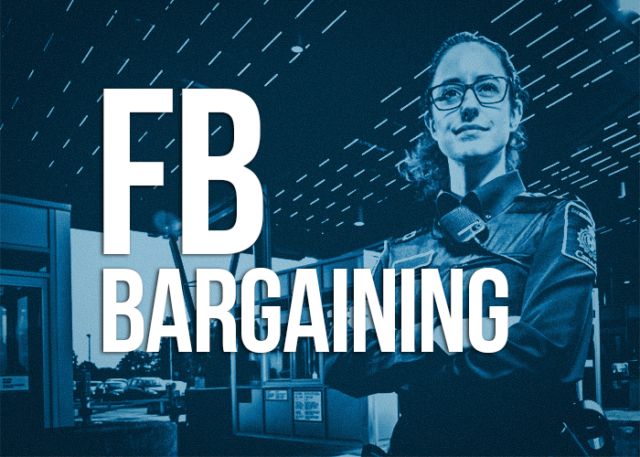
Picture of a Border Services Officer with the words FB Bargaining

The PSAC-Customs and Immigration Union (PSAC-CIU) bargaining team representing the Border Services (FB) group made limited progress in their latest round of negotiations with Treasury Board/Canada Border Services Agency (CBSA) the week of May 13.

Leave provisions

Over the course of the three days of negotiations, the parties discussed a number of issues. With respect to leave, the employer has proposed to make Care and Nurturing Leave (Article 41 Leave for Care of Family) “subject to operational requirements”. The bargaining team told Treasury Board that the team is not prepared to take steps backwards in this round of negotiations, and that “subject to operational requirements” at CBSA all too often means “NO”, and results in grievances. The PSAC-CIU team rejected this proposal.

However, the parties did make limited progress with respect to employees accessing Compassionate Care Leave and Caregiving Leave.

Pay parity for Border Services Officers

The team discussed the FB-02 situation. We have indicated to the employer that FB-02 Border Services Officers (BSOs) are effectively doing the same job as FB-03s, and are therefore being exploited as a cheap labour force. While the union and hundreds of members have filed grievances on this issue, it is the union’s position that clear language should be introduced into the collective agreement to ensure that officers are paid at the FB-03 level as soon as they leave Rigaud. CBSA has denied this proposal. The PSAC-CIU team is maintaining its position.

Workplace changes without consent

The team raised the issue of CBSA making changes in workplaces without obtaining the union’s consent, and that we will be consulting legal counsel concerning potential further legal action against CBSA for making unilateral changes to conditions during collective bargaining.

Negotiations are set to resume June 11-13, 2019. Dates have also been set to meet throughout the summer.

Click here to review PSAC-CIU’s package of proposals as well as those of the employer.

For more information visit psacunion.ca/fb.

The original version of this article was first posted on the PSAC website.

Deployment of armed CBSA officers at Canadian airports: Letter to Ministers Goodale and Blair

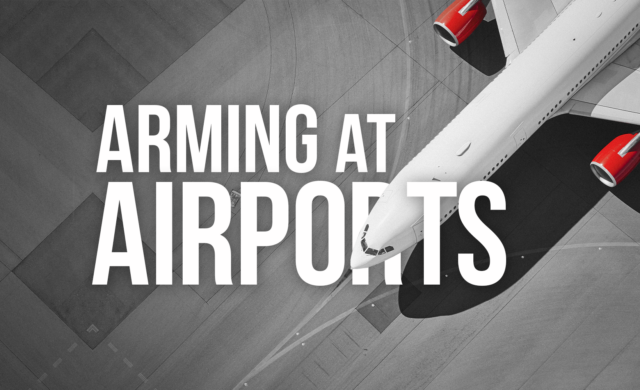
Airplane on tarmac seen from above with the words "Arming at airports"

Original letter sent to Ralph Goodale, Minister of Public Safety and Emergency Preparedness, and Bill Blair, Minister of Border Security and Organized Crime Reduction by mail on May 13, 2019.

Dear Ministers,

This letter is in reference to the recent federal government’s announcement regarding regulatory changes surrounding the authorization – or lack thereof – for Canada Border Services Agency officers to carry their sidearm while performing their duties at airports in Canada.

To summarize what was communicated to CBSA officers on April 30, 2019:

  • CBSA officers working in Canadian airports will no longer carry or use defensive equipment under a Transport Canada Exemption. Instead, new regulatory changes will be implemented. These will not be an amendment to the Transport Canada Aviation Security Regulation but instead will be covered by a new regulation;
  • As per these changes, officers working at Class 1 airports and at US Preclearance locations will only be authorized to carry their sidearm when working outside the air terminal or in transiting back to the terminal. Officers will also only be authorized to carry their sidearm inside the terminal when conducting investigations and/or surveillance of persons or goods/baggage or when conducting short-term activities for periods of up to 60 minutes.

For the past decade, the Customs and Immigration Union has been consistently vocal about the issue of federal policy preventing Border Services Officers (BSOs) from carrying their sidearm while on duty at all times, including at airports. Minister Goodale will recall my February 2017 and February 2018 letters on the subject.

In February 2018, I noted that “political intervention is required to replace the outdated CBSA and Transport Canada policies that prevent CBSA officers from carrying their sidearms at airports.” When it was announced earlier this year that a new operational solution was in the works, I was pleased to see that my point about political intervention had been taken to heart by your government, and I was hopeful that it would help remediate serious flaws in Canada’s security apparatus. Unfortunately, the announced regulatory changes are as inadequate as they are troublesome.

At first glance, the lack of clarity along with the unanticipated inclusion of time limits raise serious public safety concerns. The restrictions regarding undefined ‘short term activities’ and the imposition of arbitrary time restrictions are, to be blunt, illogical. In no way does it reflect the officers’ reality of dealing effectively and immediately with often unpredictable public safety threats.

When the public or officers are at risk, seconds matter. Having officers who are trained to use and carry a firearm operate without said firearm is a serious gap in public safety. Currently, roughly 85% of BSOs working at Canadian airports are not allowed to have their sidearm on their person, despite being trained under federal standards to do so. Instead, as you know, they are required to keep their firearm locked away. The retrieval process requires approval, which can result in unnecessary and problematic delays.

As Ministers entrusted with important security portfolios, you know better than most that, as mass population venues, airports can be subject to potentially deadly attacks. In previous correspondence with Minister Goodale, I highlighted the 2016 Atatürk Airport and Brussels Airport bombings as well as the 2017 Ft. Lauderdale airport shooting. Since then, airports and their surroundings have remained high-risk locations – the failed explosive device near the Colombo airport during the otherwise deadly series of bombings in Sri Lanka earlier this year springs to mind. In order to prevent similar tragedies from taking place on Canadian soil, law enforcement personnel, including border officers, must be able to deal immediately with any unforeseen public safety threats that could result in the loss of life.

Beyond preventing civilian casualties, it is also crucial for officers to be able to defend themselves when facing threats to their person. Just last year, in February 2018, CBSA officers at Calgary airports were confronted with an individual threatening to “blow [their] heads off” – a serious situation that I brought up to Minister Goodale at the time.

Ultimately, it remains unclear why Transport Canada’s Aviation Security Regulations allow other law enforcement agency officers to be armed while performing their duties at Canadian airports, while this government denies the same treatment to BSOs. CBSA officers should not have to rely on their fellow law enforcement colleagues for protection. As law enforcement officers, they are highly capable professionals who have received rigorous training to operate in a variety of settings, including airports. At the end of the day, this government and CBSA must ensure that their officers are always properly equipped to perform their duties in a safe and healthy environment. Given his extensive background in the law enforcement field, I am certain that Minister Blair will agree that this is common sense.

I will concede that the new policy does authorize officers to carry their sidearm in defined circumstances, and this is a welcomed step toward the formal authorization of CBSA officers being armed at airports. Unfortunately, as noted above, the policy remains vague, and its limitations mean that the situation does not appear to have changed significantly. I would also be remiss not to point out that the announced changes continue to represent a misguided use of resources. Canadian taxpayers pay for officers to undergo the use of firearm training, but due to policies such as this one, they do not reap the security benefits at airports.

In light of these observations, I trust that you will agree with me that the new policy should be revised to allow Border Services Officers to carry their full defensive equipment – including their sidearm – at all times while on duty at airports from coast to coast to coast. Doing so will only enhance Canada’s ability to ensure the safety and security of its citizens and of anyone visiting our country.

As in the past, we will be pleased to assist in any way we can to achieve this important objective.

Yours truly,

Jean-Pierre Fortin
National President
Customs and Immigration Union

Click here for the PDF version.[