

FB Members Rally in Prescott
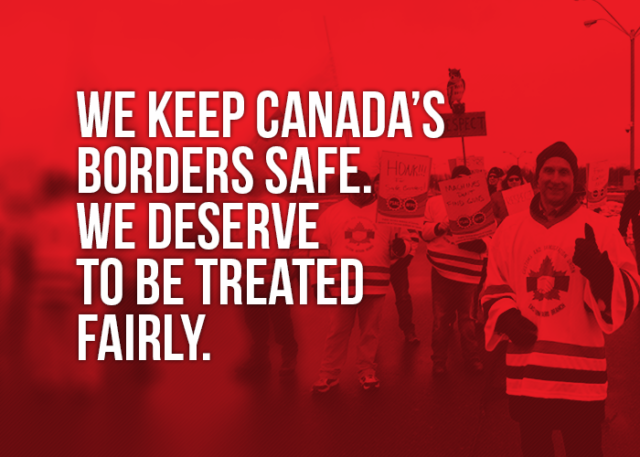
Today, members rallied at the Prescott port of entry, in Ontario, as a display of solidarity and to tell the employer that, after almost 4 years in bargaining, the FB Group deserves a fair contract now!
Today, members rallied at the Prescott port of entry, in Ontario, as a display of solidarity and to tell the employer that, after almost 4 years in bargaining, the FB Group deserves a fair contract now!
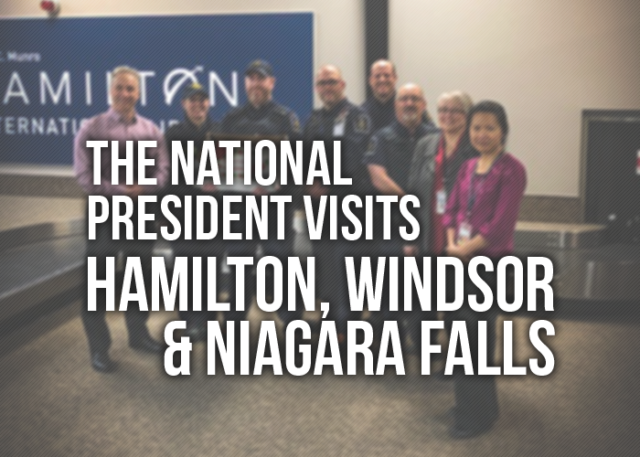
Yesterday, CIU National President Jean-Pierre Fortin met with members from several branches in Southern Ontario – Hamilton, Windsor, and Niagara Falls – to discuss ongoing bargaining efforts and union matters.
Pictured here:


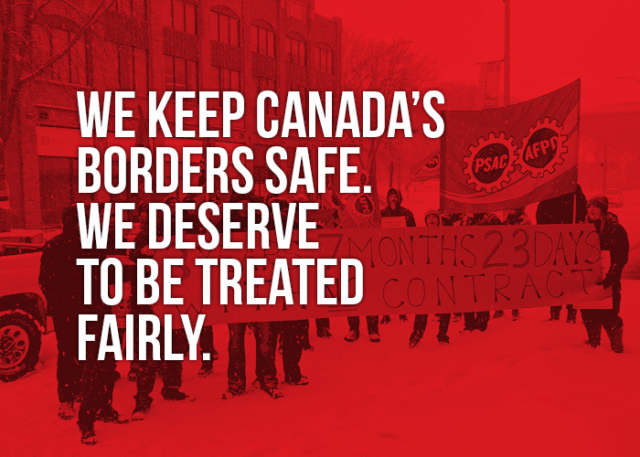
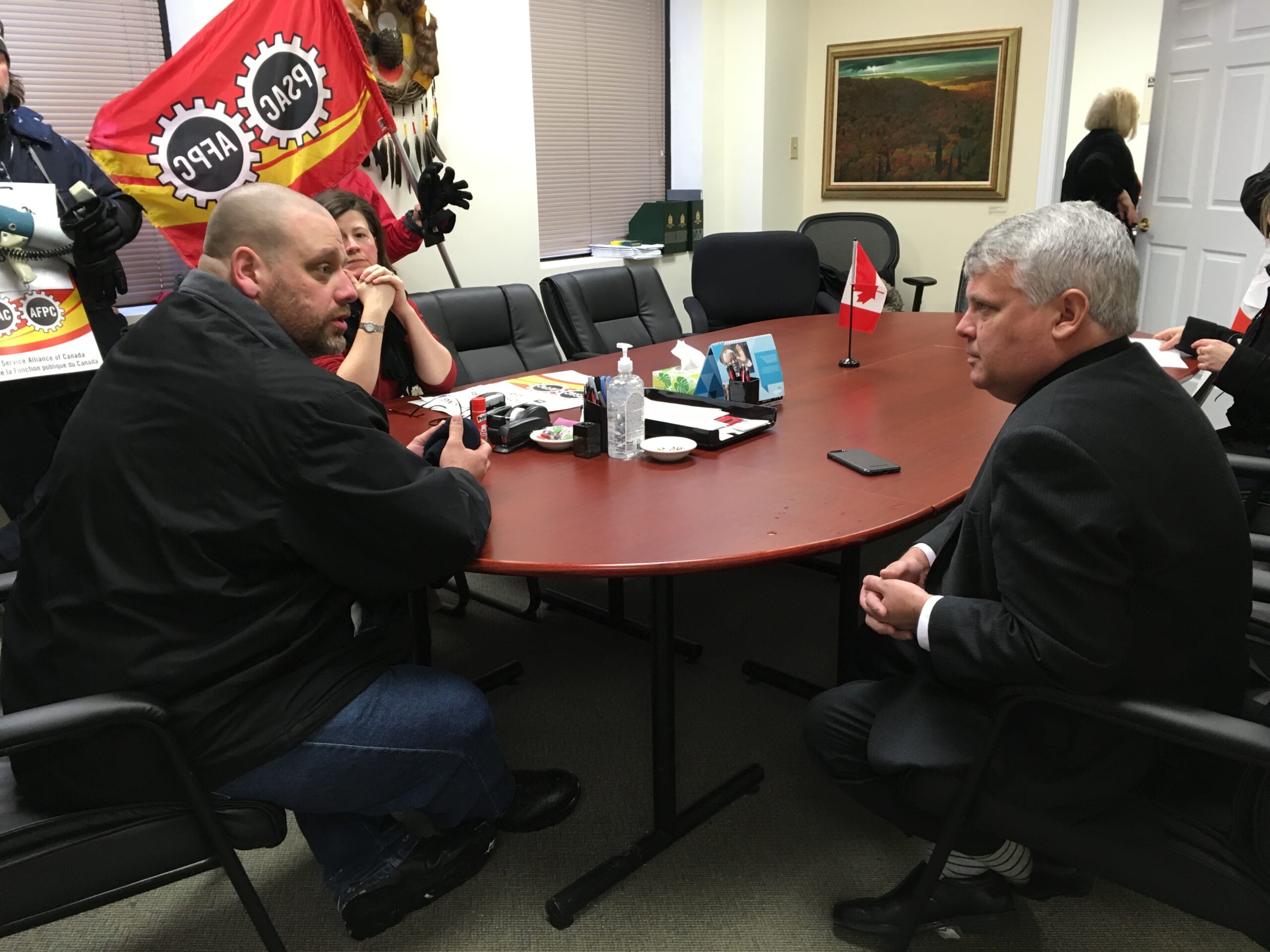
On February 22, CIU and PSAC members rallied in Sault Ste. Marie in support of ongoing national bargaining efforts for members of the FB Group (Border Services). FB members have been without a contract for over 3.5 years, and on Friday they took their message to the CBSA office, and to Liberal MP Terry Sheehan – in person.



CIU National President Jean-Pierre Fortin met with union members in Winnipeg and Emerson, Manitoba, today, to answer questions and discuss the ongoing bargaining situation as well as important union matters. In total, the National President had the opportunity to update more than 50 members on the state of the bargaining process, with a focus on the importance of the stage we have reached in our negotiations with CBSA and Treasury Board. Jean-Pierre Fortin will also be meeting with members of other Branches in the coming days.
Pictured below: The National President meeting with members in Winnipeg.



With the possibility of a strike vote on the horizon, the Essential Services Agreement (ESA) requires some clarification. This is new territory for both the union and the members, with a first ESA in place since fall 2017 only. We are hoping that this information will help address questions you may have, and give a better idea of what is in store should a strike vote result in a strike being called.
As a starting point, please review the PSAC’s list of Frequently Asked Questions (FAQ) on essential services as ot addresses several important questions. Some of the information below reflects the FAQ.
Unlike essential designations that applied to a whole position, the ESA identifies services/duties that are necessary for the safety and security of the public. It is therefore possible to be in a position where none of your duties or where only some of your duties are deemed essential.
Again, it is important to note the association to the safety and security of the public. As an example, the PSLRB decision Public Service Alliance of Canada v. Treasury Board, 2009 PSLRB 155 clarifies which services performed by Border Services Officers are considered necessary for the safety of the public, and therefore essential. These are:
Conversely, duties not deemed necessary for the safety of the public are not considered essential. Again, for BSOs, according to the 2009 PSLRB decision, these are:
Note that the example above applies only to BSOs – essential and non-essential duties can and will vary depending on the specific position. In all cases, however, the standard is the same: Duties are considered essential if they are necessary for the safety and security of the public.
The employer will be issuing ESA notices by email to members performing duties deemed essential.
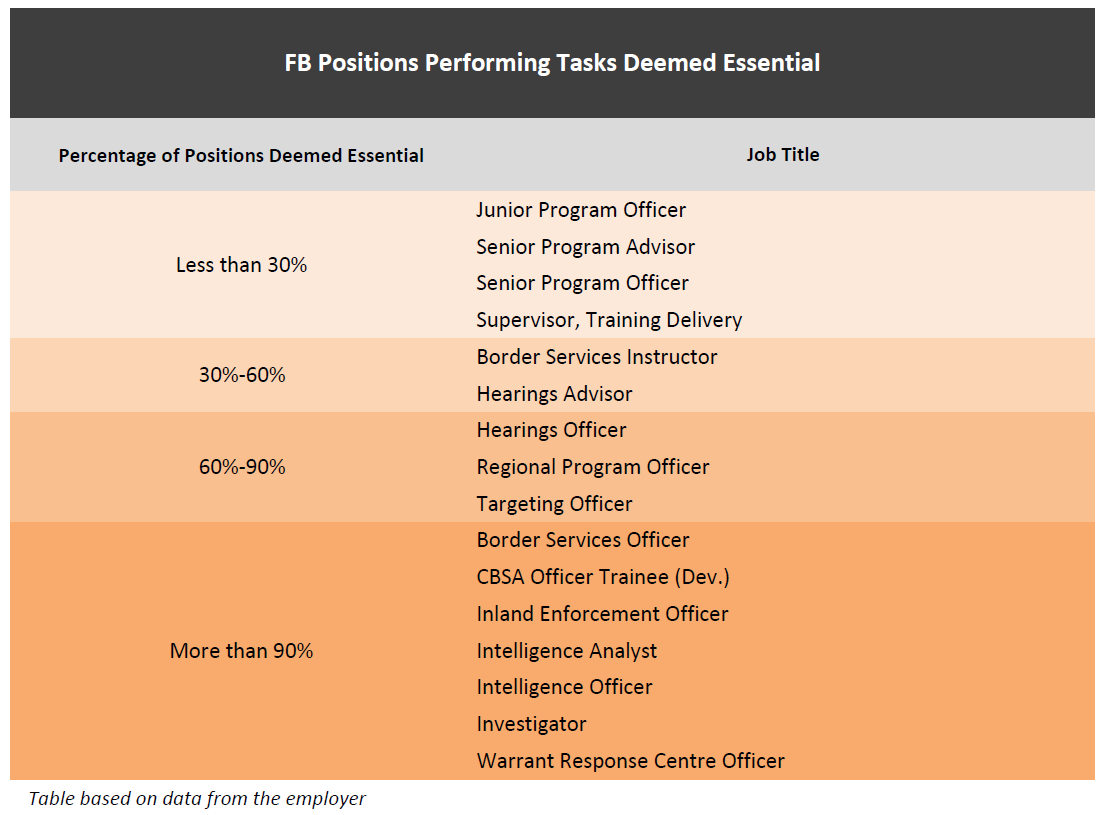
Please refer to the image above for an overview of the proportion of positions that perform tasks deemed essential for the safety and security of the public, for each job title. For example, more than 90% of Inland Enforcement Officer positions are considered to be performing duties essential to public safety. This means that the vast majority of Inland Enforcement Officers will receive an ESA notice.
Finally, in terms of strike activities, members performing essential tasks cannot participate in strike activities while on duty, but can participate while off-duty, on their own time. Furthermore, members asked to perform non-essential duties should challenge management on such direction and contact their Branch President. If members are ordered, they should follow the “work now, grieve later” rule. If this occurs, members should write down the date, time, manager’s name and the duties performed and provide this to a Union rep immediately. Similarly, if a supervisor asks members to perform the duties of an employee who is on strike, they should say no. If then ordered, they should work, then grieve.
More information will follow.
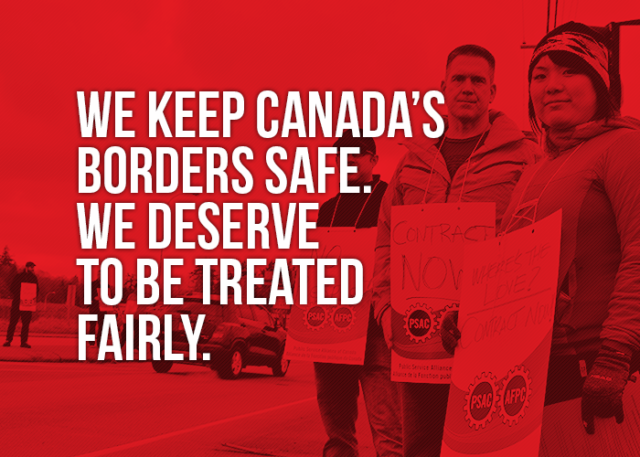
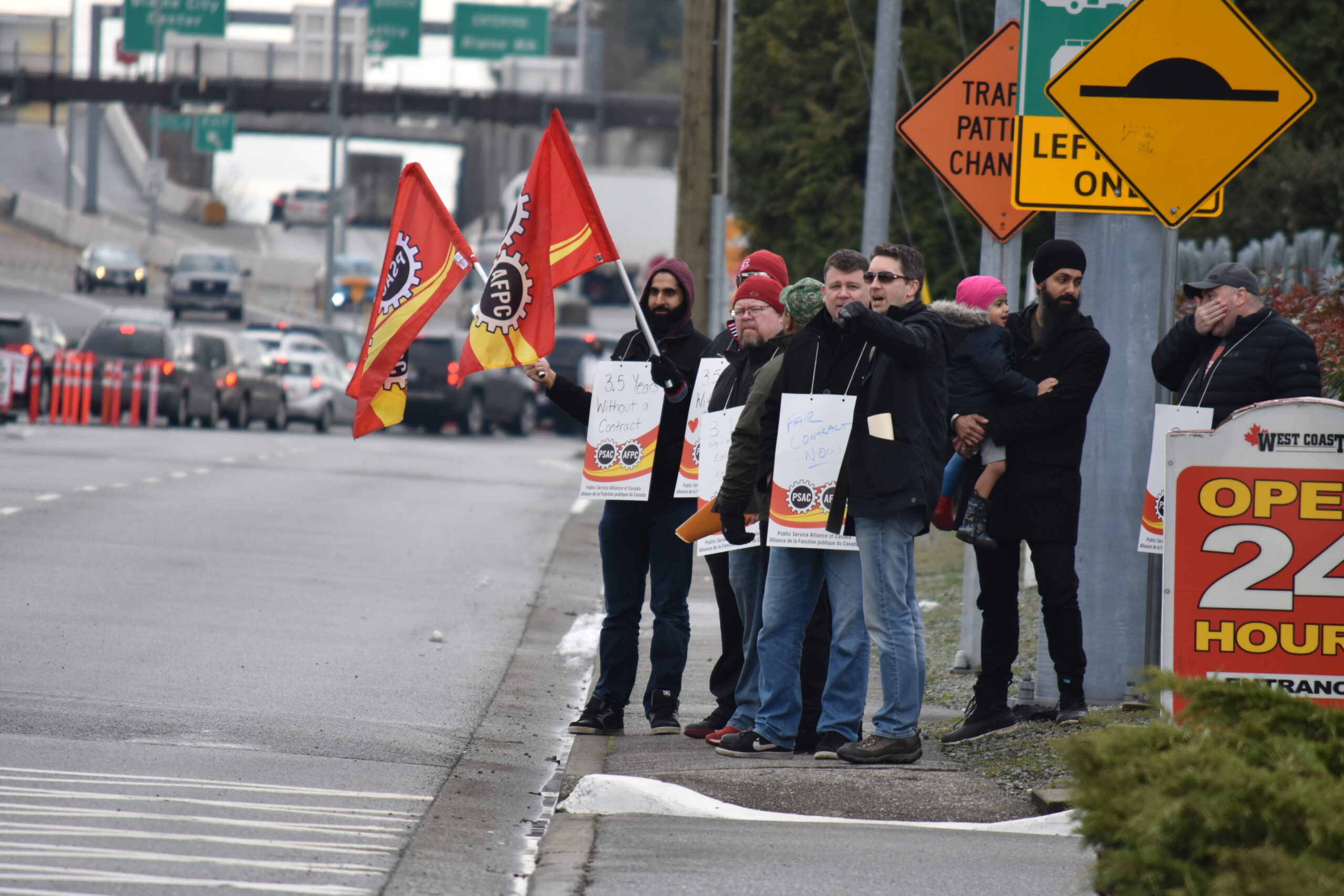
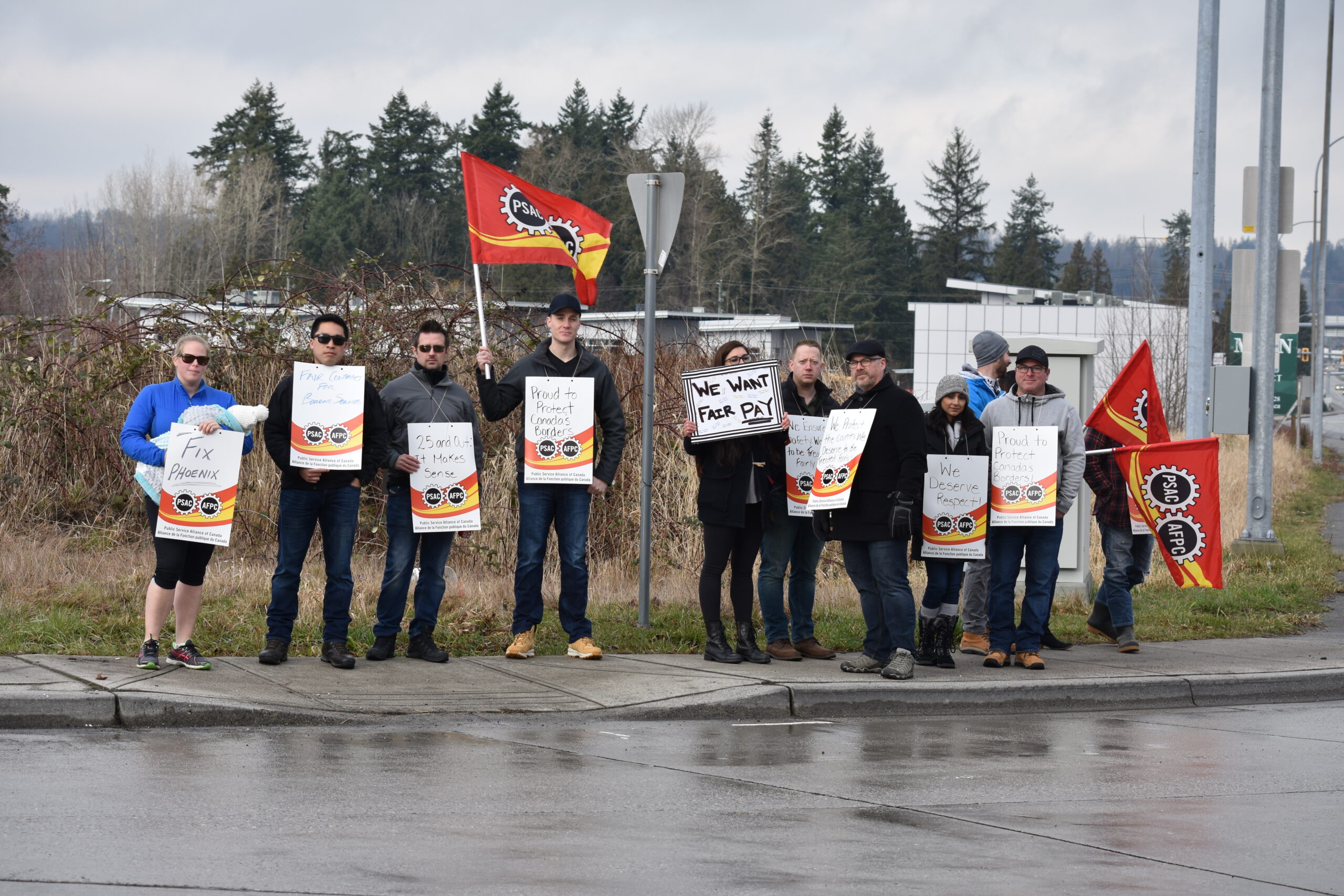
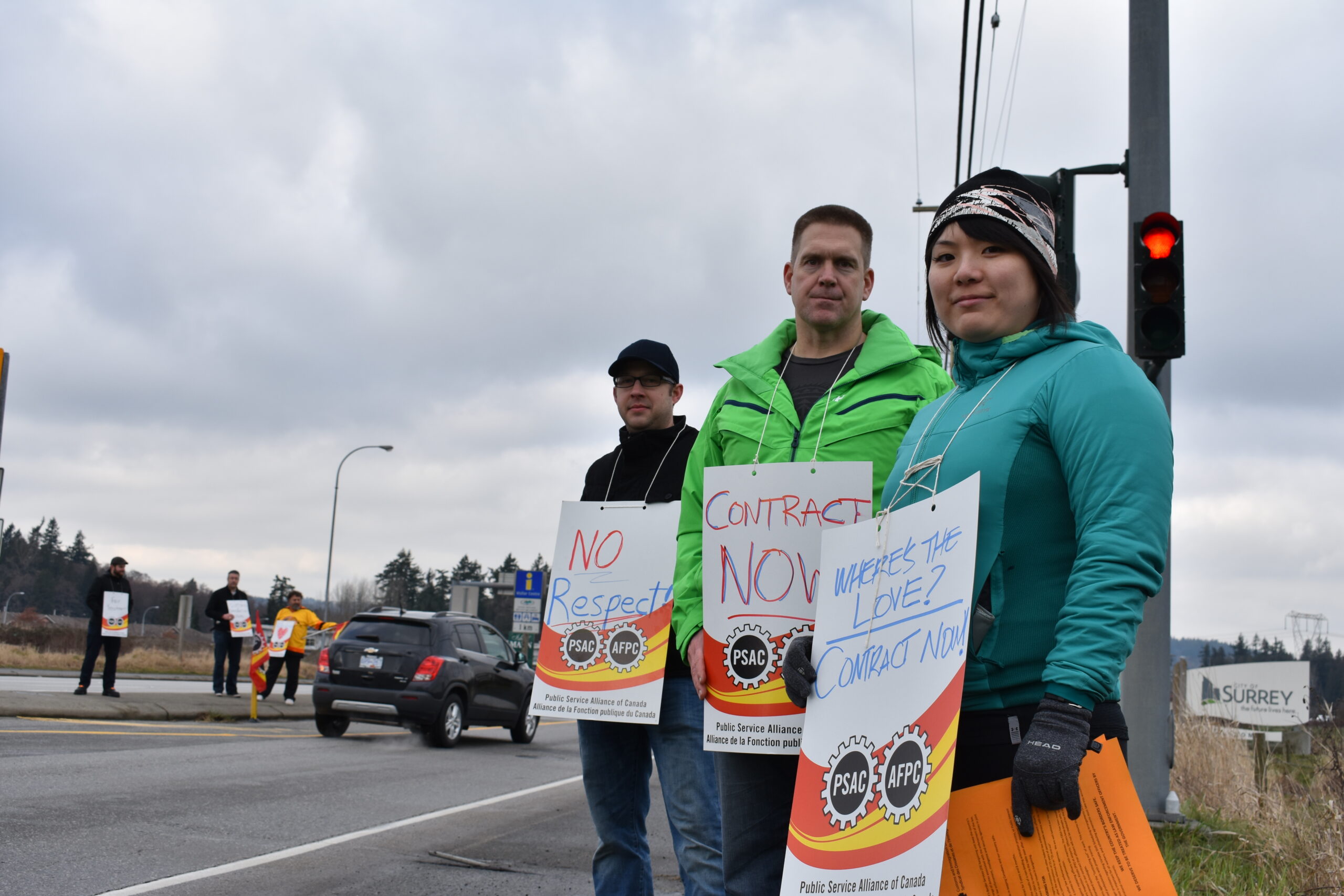
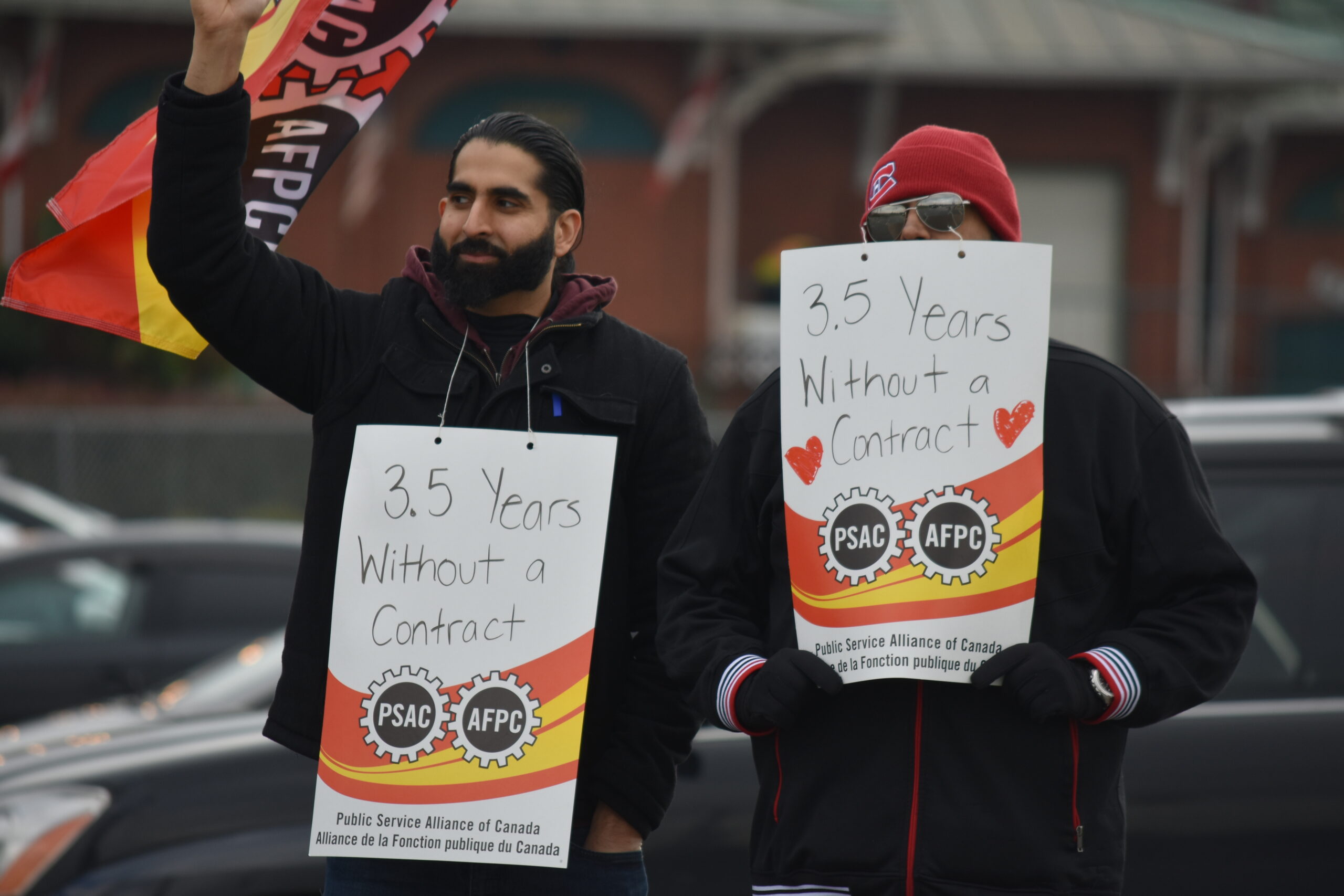
CIU/PSAC members rallied near the PAC Highway border crossing on February 14, calling on the government to show Border Services personnel some love, treat them as law enforcement, and give them a fair contract. These men and women have been without a contract for over three and a half years – they protect Canadians every day, and deserve fair treatment.





PSAC members from coast-to-coast-to-coast who are covered under four of the collective agreements with Treasury Board will be gathering in Ottawa, March 26-29, 2018 to elect bargaining teams and discuss proposals for the upcoming round of bargaining.
“PSAC’s number one priority is getting the best deal for our members,” said PSAC National President Robyn Benson. “We have a democratic process for prioritizing the proposals we bring to the bargaining table. The bargaining conference is a critical step in ensuring our members have their say.”
Over 100,000 federal public service workers are covered under the PA, TC, SV, and EB collective agreements.
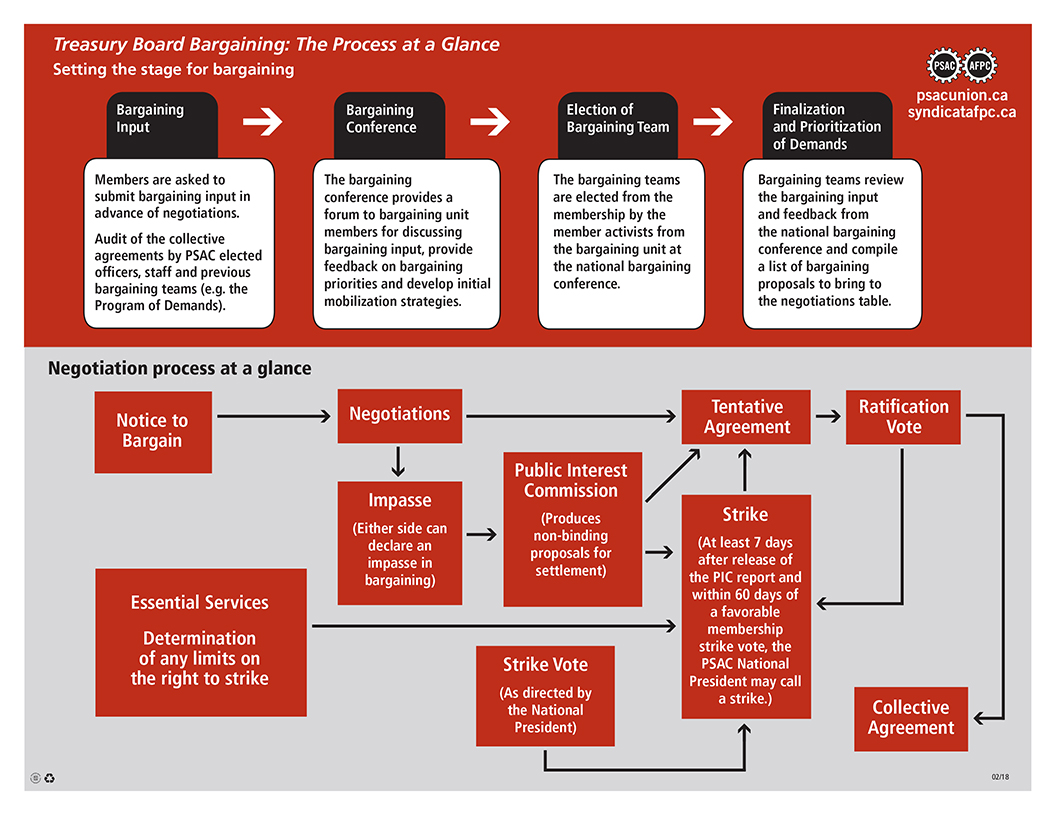
How Treasury Board bargaining works
The current collective agreements for the four groups will all expire within the next six months:
PSAC will begin negotiating new collective agreements for all four groups shortly after the March bargaining conference. The chart below briefly outlines the complete process.
 A version of this article was first published on the PSAC website.
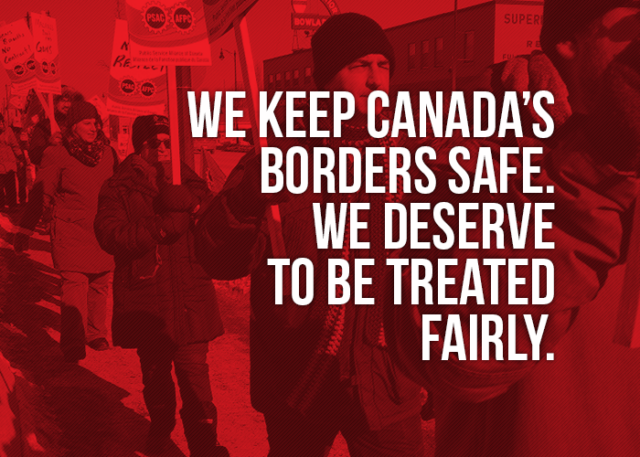
Our Sisters and Brothers from Thunder Bay and Pigeon River, in Ontario, picketed the CBSA office in Thunder Bay on Monday February 12, putting pressure on the employer to treat FB members fairly – as law enforcement officers.
These men and women protect Canadians every day. CBSA praises its members as law enforcement when it suits them in the media, while failing to address the need for parity with other law enforcement agencies at the bargaining table. That has to change – FB members deserve real respect.

Fellow CIU members, as National President of CIU, and as a Border Services Officer with over 18 years experience on the front line, I want to thank those CIU members over the last several months who have taken action at their ports, offices and outside their MPs’ offices in support of our fight for a fair contract. Officers from Edmunston, New Brunswick to Douglas, British Columbia and many points in between have participated in demonstrations and rallies in support of our fight.
We have reached a critical stage in our negotiations with CBSA and Treasury Board. It has been a long and frustrating process. We spent two and a half years (CIU and PSAC) before the courts and the Federal Public Sector Labour Relations Employment Board defending our collective bargaining rights as we challenged the previous government’s Bill C-4 and Bill C-59.
With other PSAC bargaining units we fought against attacks on our sick leave. We won that fight.
We are awaiting the Public Interest Commission’s recommendation. I want to commend the work of our Bargaining Team in representing us before the Commission. A copy of the brief submitted to the Commission is available on the CIU and PSAC websites.
As we await this recommendation CIU branches across the country have been taking action. MPs’ offices have been lobbied. Rallies have been held outside CBSA ports. The PSAC and CIU have erected billboards in several key locations across the country to inform the public of our fight for parity with the broader law enforcement community.
Fellow FBs, there is a very real chance that we will be taking the next step in the legal process after we receive the PIC recommendation – a strike vote, followed potentially by a strike if we do not reach a fair agreement. Because of our court challenges against the government, we will then have the legal right to engage in a number of worksite activities and pressure tactics that we have been restricted from doing up until now.
Now is the time for us to stand united and show CBSA and Treasury Board our solidarity. We can win this fight, but to do so we must stand together. The victories that we have won in the past – from the arming of officers to VSSAs to a 19.5% wage increase for officers in our first FB contract – all happened because we acted in solidarity.
If you have questions or concerns, or if you have ideas about how we can further pressure elected officials or our employer in this struggle, please speak with your Branch President. Please be sure to monitor the CIU and PSAC websites for regular updates.
In solidarity,
Jean-Pierre Fortin
CIU National President

Photos taken during the CIU National Convention can now be viewed on the following site.
Copies can be ordered directly from Murray Mosher.