National Accessibility Week 2026

Each year, the National AccessAbility Week is an invitation to all Canadians to come together and take action to eliminate barriers to accessibility from coast to coast, and to reflect on how our workplaces and organizations can be more inclusive for people with disabilities.

The 2026 National AccessAbility Week runs from May 31 to June 6, under the theme “Building a Strong, Accessible Canada.” This theme is of particular significance given the Accessible Canada Act, which was established with a view to make Canada free of barriers to accessibility, by January 1, 2040.

Much work remains to be done for the federal public service, as a place of employment, to become truly accessible. For its part, the Canada Border Services Agency continues to disappoint, at times seeming more interested in putting up new barriers than in taking down existing ones — the Agency’s poor track record around the treatment of accommodation needs, its lack of meaningful consultation on accessibility issues, along with its ongoing blanket review of accommodation agreements due to restrictions around firearms and use of force, spring to mind.

The fight for barrier-free, accessible workplaces involves us all. To our members living with disabilities, your union will continue to hold CBSA to task and ensure your rights are respected. Need assistance? Do not hesitate to contact us.

Pride Month 2026

In honour of Pride Month, in recognition of the hard-fought victories of the LGBTQ2+ communities, and in support of the continuing fight against discrimination, the Customs and Immigration Union will be flying the Pride Flag for the duration of the month of June.

The Pride Flag displayed outside our union’s national office serves both as a reminder of what has been won over the years, and of what remains to be done to end homophobia, transphobia, and biphobia across the country. Members of the LGBTQ2+ communities continue to face harassment and discrimination of all sorts, including in the workplace, and CIU is committed to fight for a safer, more inclusive work environment.

To our members who are facing a difficult situation at work due to discrimination based on gender identity or sexual orientation: Your union is here for you. Please contact us if you’re in need of assistance.

Find Pride events in your region

Pride season is underway, with celebrations taking place in communities across Canada throughout the summer. From marches and festivals to local community gatherings, Pride is an opportunity to celebrate, connect, and show your support for 2SLGBTQIA+ communities.

See the PSAC website to find Pride events near you.

Check out PSAC’s Gender Inclusive Language Guide for helpful tips on respecting and celebrating diverse gender identities throughout Pride season and year-round.

National Indigenous History Month: celebrating First Nations, Inuit, and Métis peoples

June is National Indigenous History Month, a time to recognize and celebrate the rich cultures, histories, and contributions of First Nations, Inuit, and Métis Peoples across Canada, from coast to coast to coast.

This month is also an opportunity to reflect, learn, and recommit to reconciliation and the advancement of Indigenous rights. Meaningful reconciliation begins with awareness and action, and each of us has a role to play.

One way to take action this June is to deepen your understanding of Indigenous histories, rights, and realities. PSAC’s online course, Walking in Our Truth Together, was developed in collaboration with Canadian Geographic and invites you to explore treaties, Indigenous law, residential schools, MMIWG, and more, at your own pace.

We also encourage everyone to explore resources from the National Centre for Truth and Reconciliation and consider making a personal or professional commitment aligned with the TRC’s Calls to Action.

Start learning today!

Walking in Our Truth Together

Together, we can contribute to a more just and respectful future for all peoples in Canada.

This article was first published on the PSAC website.

Allow border officers to patrol, conduct structural review, expand training facilities: Parliamentary Committee issues sweeping recommendations to improve border services

The House of Commons Standing Committee on Public Safety and National Security is categorical: Border officers should be allowed to act between ports of entry!

This is just one of the many sweeping recommendations (27 in total) contained in a report recently released by the Committee. The report, which brings the Committee’s study on the management of the Canada-United States border to a close, touches on matters as diverse as operational capacity, infrastructure, recruitment, and even the very mandates of both CBSA and the RCMP.

Many of the Committee’s recommendations directly echo information provided by the Customs and Immigration Union, with CIU National President Mark Weber having been one of the first witnesses invited to participate in the study, last fall. In his testimony, the National President had made a number of suggestions on how to improve Canada’s borders operations, and it is clear that Committee members took note.

Read the report

Notably, Recommendation 1 of the report highlights the need for the Government of Canada to “add to the mandate of Canada Border Services Agency officers the power to patrol and intervene in the event of urgent situations outside official ports of entry at the Canada–United States border.” CIU has long advocated for border officers to be empowered to patrol between ports of entry, and we applaud the members of the Committee for recommending to expand the role of border officers in such a way.

The Committee does not stop there:

  • Recommendation 4 urges the government to expand, modernize, and properly fund CBSA training facilities.
  • Recommendation 5 highlights the need to strengthen frontline operations.
  • Recommendation 6 proposes to boost “operational capacity by increasing the number of officers assigned to inspections to reduce excessive reliance on automated systems […] by retaining officers who are injured or require accommodation in order to preserve operational expertise.”
  • Recommendation 7 would see the government “mandate [CBSA] to conduct a structural review of its organization to rebalance, in particular, the ratio of operational to administrative positions, where necessary, reducing the number of middle managers as necessary, and that this review include […] an independent assessment of practices related to accommodating and retaining injured or disabled employees, conducted in collaboration with the union.”
  • Recommendation 8 brings to light the need for CBSA to “reduce its reliance on student border officers.”

The list goes on.

These recommendations touch on many of the core problems CIU has identified within CBSA over the years, and it is invigorating to see the Committee urge the federal government to explore these avenues of improvement.

While the report and its recommendations are non-binding, it does request a “comprehensive response” from the government. We can only hope the government will listen and do what is required to ensure strong, resilient, well-managed border services.

PA bargaining: No meaningful progress after two more days of mediation

PA Group

Our PA bargaining team met with Treasury Board for two additional days of mediation on May 26–27. Despite the union continuing to raise the issues that matter most to members, there was no meaningful progress at the table.

In fact, after nearly a year of stalling from the employer, these two days of mediation only reinforced how far apart we still are and how unwilling Treasury Board is to budge.

That includes Treasury Board’s insulting wage proposal of less than 1 per cent per year — an offer that would amount to a real pay cut and make life less affordable for federal workers.

Our next steps depend on the upcoming decision from the Federal Public Sector Labour Relations and Employment Board.

When the Board appointed a mediator for the PA Group, it also reserved its decision on PSAC’s request to bypass the Public Interest Commission (PIC) process until May 29. That deadline is now here.

Keep the momentum going

While we wait for the Board’s decision and prepare our next steps, here are some ways to stay informed, connected, and ready to take action:

View PDF 

This article was first published on the PSAC website.

National Equity Conferences: Intersections of Power – Lifting Every Voice!

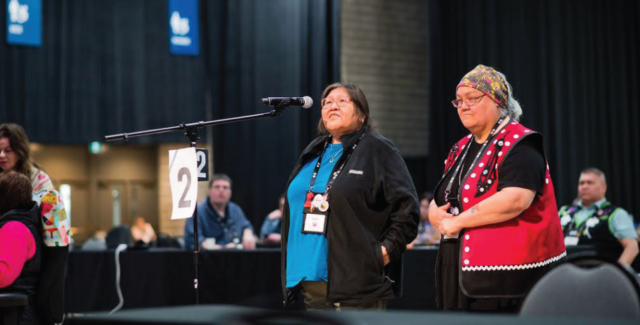
From May 3 to 7, PSAC’s 2026 National Equity Conferences brought 400 members together from across the country. Indigenous, Racialized, Access, Pride, and Black Caucus members came to speak openly about the realities they face: systemic discrimination and racism, barriers to accessibility, underrepresentation in leadership, and inequities in hiring and workplace culture – and to push for change.

Focused on the theme “Intersections of Power: Lifting Every Voice”, delegates debated and voted on resolutions to advance accessibility and disability rights, strengthen Indigenous self-determination, promote leadership and inclusion for 2SLGBTQIA+ and gender‑diverse members, and confront systemic racism in workplaces and union structures. Representatives were also elected to some equity group positions, with the remaining elections to follow over the spring and summer.

Numerous speakers and panellists shared lived experiences and practical tools, with a focus on allyship as a driver of lasting change.

“Allyship takes learning and unlearning, followed by informed action,” said Amira Elghawaby, Human Rights Advocate and Canada’s former Special Representative on Combating Islamophobia.

On May 5, delegates marked Red Dress Day by tying red ribbons on Willow Women, an installation by Métis artist and activist Jaime Black-Morrisette, honouring Missing and Murdered Indigenous Women, Girls, and Two-Spirit people. They also took part in a Red Dress Day march in Winnipeg alongside community members.

Members also took the time to acknowledge colleagues facing job losses as workforce adjustment rolls out across the country in the federal public service. Quebec delegate Mamadou Ndiaye marked the moment with a poem, that closed with this: Hurt, yes. Sad, yes. Yet still standing. Still strong. Still united.

“Equity is at the heart of our union. When we come together like this, we build the relationships and trust needed to move forward in solidarity.” — Terrie Lynn Fowler, delegate, Newfoundland and Labrador.

View our photo gallery

Mamadou Ndiaye’s poem was written in French and has been translated into English.

Thinking of our affected sisters and brothers

Look

at all the sisters,

all the brothers,

whose voices still echo

in our silence.

No longer here,

cut down by the employer,

like branches in the winter.

And the vacant office chairs,

they speak.

Telling a tale of emptiness,

whispering their names,

whispering their smiles.

The employer has made cuts,

but failed to see

what cannot be cut.

You are all still here,

right next to us,

in every breath,

in our hearts.

Listen closely:

in the silence, their cries;

in the night, their tears;

in our hearts, their strength.

No,

neither fear,

nor sadness

can break

this invisible thread

between us.

We are a family

bound by courage and memory.

Bent, yes,

but never broken.

Standing,

still standing,

with one body,

with one voice.

And in the face of this storm,

we will endure.

Against these hardships, we will prevail.

Against this employer, we will prevail.

Hurt, yes

Sad, yes

Yet

Still standing

Still strong

Still united

We will prevail

We will prevail

In solidarity.

Mamadou Ndiaye

This article was first published on the PSAC website.

Treasury Board bargaining: Insulting wage offers, and impasse at the TC table

PA bargaining: Treasury Board tables insulting wage offer after almost a year of delays

Our PA bargaining team spent three days in mediation with Treasury Board, April 28– 30. While we did see some minor movement at the table after months of delay, most of it was limited to editorial matters. The employer remained focused on pushing concessions instead of seriously addressing members’ priorities.

Talks came to a screeching halt when Treasury Board tabled an insulting wage offer more than four months after receiving our economic proposal. In light of the disrespect the employer has shown with this proposal and throughout the process, our PA bargaining team is assessing next steps.

Read the full update on the PSAC website.

SV bargaining: Employer’s wage offer betrays “Canada strong for all” promise

Our SV bargaining team met with the employer on April 29–30 and, after more than four months without responding to our economic proposal, Treasury Board finally provided their wage offer:

  • 2.0% in 2025
  • 0.5% in 2026
  • 0.5% in 2027
  • 0.5% in 2028

The insulting wage proposal amounts to less than 1% per year. It’s a clear pay cut at a time when the cost of living has far outpaced wages. It also sends a clear message about how little value the employer places on the work you do every day to deliver critical public services across the country.

Read the full update on the PSAC website.

TC bargaining update: Employer wage offer unacceptable, impasse declared

Our TC bargaining team met with the employer on April 29-30 to make progress on key priorities. The employer’s insulting wage proposal was the final straw for our bargaining team after the employer spending months ignoring our top issues, leaving us with no choice but to declare impasse.

The employer tabled a wage proposal that falls short of keeping up with the cost of living. There was also no movement on our proposals to improve job security, remote work, market adjustments or allowances– key issues for our members. To add insult to injury, the employer is calling for concessions that would limit access to family-related leave, personal needs leave, and roll back hours of work provisions, including overtime and standby.

Read the full update on the PSAC website.

Red dresses, remembrance, and a call for justice for MMIWG2S

Red Dress Day is a day of remembrance and action to honour Missing and Murdered Indigenous Women, Girls, and Two-Spirit people (MMIWG2S). Each year on May 5, red dresses are hung in public spaces as a powerful reminder of the lives lost and the ongoing impacts of colonial and gender-based violence

Indigenous women, girls, and Two-Spirit people make up about 5 percent of Canada’s population but roughly 16 percent of all women who are murdered or go missing. These numbers are not just statistics – they are the result of centuries of colonialism, racism, and sexism that continue to push  Indigenous people into unsafe housing, poverty, and precarious work, while police and governments have been too slow to act when they go missing or are harmed. For families left waiting, searching, and fighting for answers with little support and no clear path to justice, the weight of that failure is devastating.

Indigenous families, communities, and leaders continue to call for justice, safety, and accountability. PSAC echoes these calls, including in demanding thorough searches in cases like the Prairie Green landfill, and calls on governments at all levels to act.

From remembrance to real change

Justice means more than finding those who are missing. Ending this violence requires meaningful systemic change – safe housing, income security, health care, and community-led support – and confronting the racism and sexism embedded in policing, child welfare, and the justice system. It means governments finally acting on the Calls for Justice so that Indigenous women, girls, and Two-Spirit people can live with the safety and dignity they deserve.

Real change starts with all of us.

Here are three things you can do today:

  • Share the 231 Calls for Justice and invite members to read at least one Call connected to their sector.
  • Reflect on the Call for Justice 15.1. and what “denounce and speak out against violence” looks like in your workplace.
  • On May 5, leave one chair empty with a red dress or red ribbon to honour missing loved ones.
  • Wear red on May 5 and take a group photo to share in solidarity.

This article was first published on the PSAC website.
Celebrating Jewish workers’ voices and resilience in our labour movement

This Jewish Heritage month, we recognize and celebrate Jewish workers and the many ways Jewish communities have helped shape Canada’s labour movement. Their courage, creativity, and strong sense of justice have helped advance fair pay, safer workplaces, human rights, and dignity on the job.

Today, Jewish members of PSAC continue that work by speaking up for fairness and strong workplace protections in the federal public service. Their efforts are often guided by values of community care and tikkun olam – a call to repair the world through collective care and action.

Confronting antisemitism and building inclusive unions

Jewish workers in Canada reflect a wide range of backgrounds, languages, and lived experiences.  That diversity strengthens our union and pushes us to build spaces where everyone feels safe, respected, and included.

We remember the Holocaust. We honour those who were killed and those who survived. We also recognize our shared responsibility to confront antisemitism and racism wherever they appear.

Antisemitism continues to affect Jewish workers in Canada, including in workplaces and unions. It can take the form of stereotypes, conspiracy theories, harassment, or threats. PSAC is committed to confronting it and ensuring Jewish members can fully and safely participate in union life.

We are building a truly anti-racist union that supports all equity-seeking members, including Jewish workers.  That means strengthening equity committees, providing human rights and anti-racism training, and advancing protections against discrimination.

Jewish cultures, traditions, languages, and community life are part of what makes our union stronger. This Jewish Heritage Month, let’s honour that legacy and keep building more inclusive spaces for all.

This article was first published on the PSAC website.