Treasury Board bargaining: Insulting wage offers, and impasse at the TC table

PA bargaining: Treasury Board tables insulting wage offer after almost a year of delays

Our PA bargaining team spent three days in mediation with Treasury Board, April 28– 30. While we did see some minor movement at the table after months of delay, most of it was limited to editorial matters. The employer remained focused on pushing concessions instead of seriously addressing members’ priorities.

Talks came to a screeching halt when Treasury Board tabled an insulting wage offer more than four months after receiving our economic proposal. In light of the disrespect the employer has shown with this proposal and throughout the process, our PA bargaining team is assessing next steps.

Read the full update on the PSAC website.

SV bargaining: Employer’s wage offer betrays “Canada strong for all” promise

Our SV bargaining team met with the employer on April 29–30 and, after more than four months without responding to our economic proposal, Treasury Board finally provided their wage offer:

  • 2.0% in 2025
  • 0.5% in 2026
  • 0.5% in 2027
  • 0.5% in 2028

The insulting wage proposal amounts to less than 1% per year. It’s a clear pay cut at a time when the cost of living has far outpaced wages. It also sends a clear message about how little value the employer places on the work you do every day to deliver critical public services across the country.

Read the full update on the PSAC website.

TC bargaining update: Employer wage offer unacceptable, impasse declared

Our TC bargaining team met with the employer on April 29-30 to make progress on key priorities. The employer’s insulting wage proposal was the final straw for our bargaining team after the employer spending months ignoring our top issues, leaving us with no choice but to declare impasse.

The employer tabled a wage proposal that falls short of keeping up with the cost of living. There was also no movement on our proposals to improve job security, remote work, market adjustments or allowances– key issues for our members. To add insult to injury, the employer is calling for concessions that would limit access to family-related leave, personal needs leave, and roll back hours of work provisions, including overtime and standby.

Read the full update on the PSAC website.

Red dresses, remembrance, and a call for justice for MMIWG2S

Red Dress Day is a day of remembrance and action to honour Missing and Murdered Indigenous Women, Girls, and Two-Spirit people (MMIWG2S). Each year on May 5, red dresses are hung in public spaces as a powerful reminder of the lives lost and the ongoing impacts of colonial and gender-based violence

Indigenous women, girls, and Two-Spirit people make up about 5 percent of Canada’s population but roughly 16 percent of all women who are murdered or go missing. These numbers are not just statistics – they are the result of centuries of colonialism, racism, and sexism that continue to push  Indigenous people into unsafe housing, poverty, and precarious work, while police and governments have been too slow to act when they go missing or are harmed. For families left waiting, searching, and fighting for answers with little support and no clear path to justice, the weight of that failure is devastating.

Indigenous families, communities, and leaders continue to call for justice, safety, and accountability. PSAC echoes these calls, including in demanding thorough searches in cases like the Prairie Green landfill, and calls on governments at all levels to act.

From remembrance to real change

Justice means more than finding those who are missing. Ending this violence requires meaningful systemic change – safe housing, income security, health care, and community-led support – and confronting the racism and sexism embedded in policing, child welfare, and the justice system. It means governments finally acting on the Calls for Justice so that Indigenous women, girls, and Two-Spirit people can live with the safety and dignity they deserve.

Real change starts with all of us.

Here are three things you can do today:

  • Share the 231 Calls for Justice and invite members to read at least one Call connected to their sector.
  • Reflect on the Call for Justice 15.1. and what “denounce and speak out against violence” looks like in your workplace.
  • On May 5, leave one chair empty with a red dress or red ribbon to honour missing loved ones.
  • Wear red on May 5 and take a group photo to share in solidarity.

This article was first published on the PSAC website.

Celebrating Jewish workers’ voices and resilience in our labour movement

This Jewish Heritage month, we recognize and celebrate Jewish workers and the many ways Jewish communities have helped shape Canada’s labour movement. Their courage, creativity, and strong sense of justice have helped advance fair pay, safer workplaces, human rights, and dignity on the job.

Today, Jewish members of PSAC continue that work by speaking up for fairness and strong workplace protections in the federal public service. Their efforts are often guided by values of community care and tikkun olam – a call to repair the world through collective care and action.

Confronting antisemitism and building inclusive unions

Jewish workers in Canada reflect a wide range of backgrounds, languages, and lived experiences.  That diversity strengthens our union and pushes us to build spaces where everyone feels safe, respected, and included.

We remember the Holocaust. We honour those who were killed and those who survived. We also recognize our shared responsibility to confront antisemitism and racism wherever they appear.

Antisemitism continues to affect Jewish workers in Canada, including in workplaces and unions. It can take the form of stereotypes, conspiracy theories, harassment, or threats. PSAC is committed to confronting it and ensuring Jewish members can fully and safely participate in union life.

We are building a truly anti-racist union that supports all equity-seeking members, including Jewish workers.  That means strengthening equity committees, providing human rights and anti-racism training, and advancing protections against discrimination.

Jewish cultures, traditions, languages, and community life are part of what makes our union stronger. This Jewish Heritage Month, let’s honour that legacy and keep building more inclusive spaces for all.

This article was first published on the PSAC website.

Asian Heritage Month: Recognizing contributions and confronting anti-Asian racism

Asian Heritage Month is a time to recognize the strength, diversity, and contributions of Asian communities across Canada. It is an opportunity to honour the many ways people of Asian descent have helped shape this country, through their work in public services, the labour movement, and communities across Canada.

It is also a time to confront the racism and barriers that many Asian workers still face. Anti-Asian racism remains a reality in workplaces and in society. Stereotypes such as the “model minority” myth can hide the challenges Asian workers face and make it harder to address barriers to hiring, advancement, fair pay, and leadership. Asian workers are also often underrepresented in leadership roles despite high levels of education and strong contributions to the workforce.

These challenges can be even greater for people facing layered forms of discrimination, including women and members of religious minorities. Hate crimes targeting Asian communities have increased in recent years, underscoring the need for action.

PSAC is in solidarity with Asian workers and remains committed to fighting racism and building fair, inclusive workplaces for all.

Show your support this month: Download the Asian Heritage Month background and poster

This article was first published on the PSAC website.

May Day 2026: When workers unite, we all win

On May Day, also known as International Workers’ Day, we reflect on what we have won together and on the power of collective action to create change in our workplaces and communities.

We mark May Day to honour the roots of our movement. On this day in 1886, in Chicago, Illinois, workers took to the streets in a general strike to fight for an eight-hour workday. Their protest was met with violence from anti-union forces determined to stop these protections from becoming reality.

But when workers stand together, we are powerful. And when we stay united in the face of backlash, we can win lasting change.

One hundred and forty years later, the eight-hour workday is the standard for many workers, and the labour movement continues to fight to protect these rights and expand them for everyone.

The eight-hour workday is just one example of what workers have won through organizing. Workers are who secured weekends, maternity and parental leave, health and safety laws, employment standards, and so many other protected rights that we benefit from today.

PSAC has a long and proud history of helping raise the bar for workers across the country.

Print PSAC’s 2026 May Day poster!

In 1980, over 10,000 PSAC members in clerical and regulatory jobs, positions primarily held by women, organized and took action for equal pay. They won wage increases for themselves and their coworkers and helped spark broader demands for pay equity across the public service.

In 2026, we carry that struggle forward. We are working to protect the public services that make our country strong. We’re fighting for flexible work arrangements. We are pushing back against the misuse of risky AI technologies that threaten good union jobs. And we’re demanding safe and healthy workplaces for all.

Today, we recommit ourselves to the solidarity that anchors our movement. Together, we can create change in our workplaces and strengthen our communities and our country.

We do that by growing our movement and staying united.

Want to join the campaign to protect public services and workers’ rights? Visit ForYouCanada.ca to sign up and take action.

This article was first published on the PSAC website.

Support remote work: Sign the House of Commons petition

Workers and unions across Canada are continuing to push back against arbitrary return-to-office mandates that ignore the realities of modern work. A new House of Commons e-petition, Petition e-7142, is calling on the federal government to update the Canada Labour Code to better reflect those realities.

The petition asks the government to guarantee that federally regulated employees whose jobs are primarily computer-based have the right to work remotely at least three days per week – unless their work requires them to be physically present, such as in emergency, medical, or caregiving roles.

This petition reflects what PSAC members have been saying for years: flexibility matters, and workers should have a real say in how their work is organized.

Whether you work in the federal public service, a federally regulated workplace, or the private sector, we know that remote work increases productivity, lowers operating costs, decreases traffic, and improves quality of life. Workers deserve the right to negotiate work arrangements that balance flexibility with operational needs, not have them imposed without consultation.

This petition is one way to send a clear message to Parliament that workers expect better. Remote work isn’t just about convenience, it’s about equity, accessibility, and building workplaces that reflect today’s workforce.

Add your name to Petition e-7142 and show your support for flexible, worker-centered workplaces.

This article was first published on the PSAC website.

Why does federal bargaining take so long?

Why does it take years to reach a new collective agreement in the federal public service? PSAC’s new video looks at one of the biggest problems in the current system: outdated rules under the Federal Public Sector Labour Relations Act (FPSLRA) that create barriers at the bargaining table and slow the path to a new agreement.

The video explains how the current system restricts what can be negotiated and builds delays into the bargaining process, including through the Public Interest Commission (PIC) process. It helps explain why federal workers can spend years waiting for movement at the table, and why that needs to change.

Mediation for the PA Group

The PA bargaining team is meeting with a third-party mediator from April 28–30 in an effort to help break the deadlock in negotiations and move discussions forward.

When PSAC declared impasse, we asked the Federal Public Sector Labour Relations and Employment Board to skip the PIC process so bargaining could move ahead more quickly. Treasury Board opposed that request. Rather than deciding on the issue, the Board said it will hold its decision until May 29 or the conclusion of mediation.

This makes it an important time to build awareness and support around one of the key problems in the current bargaining system: the delay and added barriers created by the PIC process.

Federal public service workers deserve a bargaining system that is fair, timely, and effective — not one that forces workers through unnecessary delays before negotiations can meaningfully progress.

It’s time to speed up dispute resolution by removing the Public Interest Commission process, so members get fair outcomes without needless delays.

Get involved

This video is part of PSAC’s broader campaign to modernize the FPSLRA.

The more members understand how the legislation affects bargaining, the stronger we will be in pushing for change. That means learning about the issues, sharing the videos, using the campaign tools, and speaking out in support of a better system.

Visit the campaign page to:

  • Watch the full video series
  • Explore the discussion guide and other resources
  • Use the lobby and social media kits
  • Send an email to your MP

Watch the video, explore the campaign, and take action now.

This article was first published on the PSAC website.

National Day of Solidarity shows Treasury Board workers are united

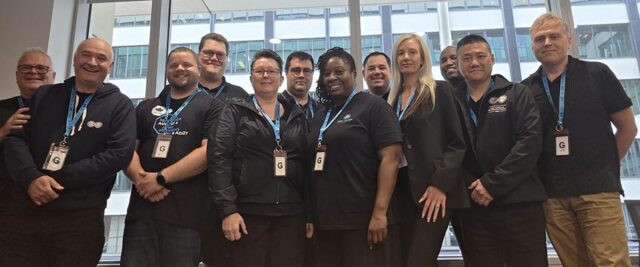
Yesterday, PSAC members showed Treasury Board that workers are engaged, united, and ready to show up for the teams at the bargaining table.

Thousands of you wore black while bargaining was underway, filling our screens and workplaces with a visual reminder that 120,000 workers are paying attention. You turned a simple gesture into a powerful show of support and a clear message to the employer.

View photos

Yesterday’s National Day of Solidarity wasn’t just a single action. It was a commitment to showing up for our bargaining teams throughout this round. It demonstrated the power we have when we work together.

Now, let’s keep that momentum going. You can continue to show your support by:

Most importantly, continue talking with your co-workers about bargaining and what’s at stake in this round, because this is just the beginning.

This article was first published on the PSAC website.
PSAC raises the alarm on increased privatization of public services in the Spring Economic Update

The Public Service Alliance of Canada (PSAC) is urging the Carney government to recognize that building a “Canada Strong for All” cannot be done without a strong public service.

The government has framed their Spring Economic Update as a good news story, but that “good news” is being built on the backs of the public service workers that people in Canada rely on every day.

This announcement comes at a time when federal public service workers are already facing deep cuts, growing workloads, and an uncertain future, with 30,000 jobs planned to be eliminated. These cuts weaken the services people depend on: meaning longer waits for parental leave, pension payments, and critical veterans’ care.

People in Canada need to know that the food on their table is safe. That veterans’ care is available when they need it. That the benefits they count on will be there so they can make ends meet. Cutting good jobs and defunding public services won’t build a “Canada Strong for All.” Public services are the foundation of a strong Canada – and they need to be well-funded and well-staffed to function.

This government must put the needs of workers and families in Canada before those of the wealthy CEOs and private corporations.

We are concerned about the language in this update on exploring “alternative models of ownership” for Canada’s airports. Private investors are not interested in running airports for the public good or for the benefit of travellers – they are interested in profit. At a time when Canada needs to be the strongest it can be, handing critical public infrastructure to private corporations is not in the public’s best interest.

PSAC calls on the government to invest in the public services that keep our country and our communities safe and strong, and to stop the cuts.

This article was first published on the PSAC website.

PSAC’s 2026 Scholarship Program is now open

Applications for the 2026 PSAC Scholarship Program are now open!

This year, PSAC is offering 24 scholarships, including: 

  • 14 scholarships for dependent children of current PSAC members who will be attending full-time studies at a recognized post-secondary institution in fall 2026
  • Three scholarships for PSAC members who will be registered in full-time studies at a recognized post-secondary institution in fall 2026
  • Two scholarships for PSAC members who will be registered in part-time studies at a recognized post-secondary institution in fall 2026
  • Five scholarships for members or dependents of members who self-identify as a woman, Indigenous, person with a disability, racialized or 2SLGBTQIA+

Deadline: June 22, 2026, at 11:55 p.m. ET

Application details:  

PSAC Scholarship Program guidelines

Online application form

Applicants must submit an original 750- to 850-word essay or another original creative submission, such as video, infographic, song, or other format, that responds to this year’s scholarship questions. Creative submissions should be no longer than five minutes.

This year’s questions ask applicants to reflect on:

  • How major shifts such as political polarization, austerity, job loss, return-to-office mandates, and artificial intelligence have affected their lives, communities, or sense of security
  • For PSAC members: how these changes have affected their local’s ability to support members and build solidarity
  • How tools like AI can be used to strengthen connection, trust, and a more humane future of work

All submissions must be original. Applicants must cite any sources they use, and any AI assistance must be properly acknowledged.

Applicants must either be a PSAC member in good standing or the dependent child of a PSAC member in good standing as of March 31, 2026.

View the list of 2025 scholarship winners.

We look forward to receiving your application!

This article was first published on the PSAC website.