A watershed moment for our union

A message to the membership from the new CIU National President, Mark Weber.


Sisters and Brothers,

As your new National President, my first few weeks have been almost exclusively dedicated to supporting the efforts of our bargaining team. I had the pleasure of attending rallies in Windsor, Fort Erie, Lansdowne, Cornwall, Prescott and Toronto. Never have I seen greater solidarity than what you’ve shown these past few weeks. Whether attending demos, wearing your swag, volunteering, or contacting your MPs, you made it clear to our employer that we will no longer be disrespected.

Our August 6 Work to Rule campaign was a watershed moment for our great Union. Across the country, members came together and showed how powerful we really are when we act as one. Without you, we would not now have a tentative agreement to vote on. You’ve made this happen and I am so proud to represent you. The actions you took on August 6 will not be forgotten. With the next round of bargaining just around the corner, the employer will never again question our ability to mobilize.

I hope you will join me in offering my thanks to our bargaining team. They worked for years to get this agreement and, in the end, made gains that CIU had been seeking for a long time.

You will get more details about the tentative agreement in the coming weeks and will have an opportunity to ask questions of the bargaining team at your ratification meetings.

Thank you all for the amazing display of solidarity, and never forget what we accomplished together on August 6.

In solidarity,

Mark Weber
National President
Customs and Immigration Union

CBSA employees secure deal with government hours after strike action at Canada’s borders

After an intense final round of negotiations that lasted more than 36 hours, the Public Service Alliance of Canada (PSAC) and Customs and Immigration Union (CIU) reached a tentative agreement with the Canada Border Services Agency (CBSA) late Friday, August 6.

“We are relieved that CBSA and the government finally stepped up to address the most important issues for our members to avoid a prolonged labour dispute,” said Chris Aylward, PSAC national president. “The agreement is a testament to the incredible hard work and dedication of our bargaining team who worked through the night to reach a deal.”

“We also couldn’t have done it without the tremendous support of our members, who put intense pressure on the government at every airport and border crossing across the country today.”

The agreement means an immediate end to work-to-rule strike action that had begun Friday, August 6 and ensures the flow of border traffic will return to normal as the government prepares to welcome fully vaccinated U.S. travellers on Monday, August 9.

“CBSA employees have been on the front lines of the pandemic since day one, protecting our borders and keeping Canadians safe. But they weren’t receiving the support they needed from the government,” said Mark Weber, CIU national president. “Finally – after three years of negotiations – we’ve resolved longstanding issues that will go a long way towards making CBSA a better, safer place to work for our members.”

Negotiations between PSAC-CIU and CBSA began in January 2019 but reached an impasse in December 2020. In May 2021, the union presented arguments at Public Interest Commission (PIC) hearings and a PIC report was issued in July with non-binding recommendations. Following national strike votes throughout June and July, PSAC-CIU announced an overwhelming strike mandate at the end of July and issued an official strike notice on August 3. Work-to-rule action began across the country August 6 at 6 a.m. EDT.

Highlights of the tentative agreement include: 

  • A four-year agreement from 2018-2021 with an average annual increase of over 2% per year;
  • Better protections against excessive discipline in the workplace;
  • The creation of a National Joint Committee to tackle workplace culture problems at CBSA;
  • A paid meal allowance for uniformed members, similar to what most Canadian law enforcement agencies provide;
  • A commitment letter to advance the work toward the introduction of early retirement benefits for CBSA employees;
  • A better grievance-handling process;
  • Domestic violence leave;
  • Other leave and allowance improvements.

This article has also been posted on the PSAC website.

9,000 Canada Border Services Agency employees to begin job action Friday

Travelers and commercial traffic entering Canada should expect long lineups and lengthy delays at border crossings and airports starting Friday, August 6 as nearly 9,000 Canada Border Services Agency employees begin job action across the country.

The Public Service Alliance of Canada (PSAC) and the Customs and Immigration Union (CIU) served strike notice to the government Tuesday.

“We truly hoped we wouldn’t be forced to take strike action, but we’ve exhausted every other avenue to reach a fair contract with the government,” said Chris Aylward, Public Service Alliance of Canada national president. “Treasury Board and CBSA have been clear they aren’t prepared to address critical workplace issues at CBSA at the bargaining table.”

Sweeping work-to-rule strike activity will take place at all Canadian airports, land borders, commercial shipping ports, postal facilities and headquarters locations and could have a dramatic impact on Canada’s supply chain and the government’s plans to reopen the border to U.S. travellers on August 9.

“We’ve continued to serve Canadians throughout the pandemic – keeping our borders safe, screening travellers for COVID-19 and clearing vital vaccine shipments,” said Mark Weber, CIU national president. “Now it’s time for the government to step up for CBSA employees.”

Unionized employees with PSAC and the Customs and Immigration Union have been without a contract for over three years. They are seeking better protections against a toxic workplace culture at CBSA, and greater parity with other law enforcement agencies across Canada. The union declared impasse in December and applied for a Public Interest Commission (PIC) hearing after CBSA and Treasury Board were unwilling to address these core issues.

The Commission released its recommendations for both parties to reach a deal, including many improvements to the working conditions of CBSA employees. Read more about the PIC’s recommendations.

The two sides will return to the table on August 6, but work-to-rule action will begin at 6 a.m. EDT across the country if a new contract isn’t negotiated.

During work-to-rule strike action, CBSA employees will obey all of the policies, procedures and laws applying to their work, and perform their duties to ’the letter of the law’. This may cause long and unavoidable delays at Canada’s borders as workers carry out their jobs as they were trained to do.

This article has also been posted on the PSAC website.

PSAC-CIU begins sweeping job action this Friday, August 6

PSAC-CIU has given official strike notice to the government, which means effective Friday, August 6 at 6:00 a.m. (EDT), all FB members will begin work-to-rule action across the country.

This is our opportunity to cause significant disruptions to CBSA operations and force the government to come back to the table to address the toxic workplace culture at CBSA and provide parity with other law enforcement personnel across Canada.

Once the employer was served strike notice, they asked to return to the table August 4, which we agreed to, but it’s clear Treasury Board and CBSA still have no new mandate to address our core workplace issues, and we need to continue planning for strike action beginning Friday.

During a work-to-rule, we’re asking you to obey all of the policies, procedures and laws applying to your work, and to perform your duties to “the letter of the law.” Don’t work during your breaks or unpaid lunches. Don’t work past your scheduled work hours. Ask every question in your manual at ports of entry. This may cause long and unavoidable delays at Canada’s borders, but we know you take pride in your work and will rely on your discretion to not cut any corners while performing your duties.

We’ll send a clear and decisive message to the government: we’re prepared to do what’s necessary to make CBSA a better and safer place to work.

Beginning August 6, there won’t be picket lines organized at worksites. That’s because work-to-rule action will have a far greater impact on Canada’s critical supply chain and the federal government’s plans to reopen the border to U.S. travelers on August 9.

There’s no doubt our job action will result in slower processing and longer wait times. While unfortunate for travelers and commercial shipping, the blame rests squarely with Treasury Board, CBSA and the government for their inaction, disrespect and chronic understaffing. Taking strike action is always a last resort, but PSAC-CIU have exhausted all other avenues to reach a fair contract, and the government has forced us to take job action.

Work-to-rule action should never jeopardize the safety of Canadians or the security of our borders. All duties relating to the safety and security of Canada are essential and, in fact, should be done with greater diligence and in line with all enforcement manuals and legislation.

To be clear, we are asking you to do your job as you were trained to do it, in accordance with your collective agreement, policies, procedures, SOPs and laws, while adhering to all health and safety protocols. This applies to all FB members, including non-uniformed members.

This is just the first step in our strike activities. Other types of strikes, including a general strike, rotating strikes and strategic strikes, are all options under consideration for the next phases as we ramp up our strike action. Only then will essential and non-essential designations come into play.

During a work-to-rule, you will not receive strike pay because all FB members will remain at work for their regularly scheduled shifts and in your typical roles. Therefore for this first stage, there will be no loss of salary.

Our FB bargaining team has put together a comprehensive list of work-to-rule actions you can take in the workplace. Consult the list carefully and reach out to your PSAC Regional Office or your CIU Branch President at any time during this process with your questions and concerns.

For more information on the PSAC strike structures, please see the PSAC Strike Manual or our Frequently Asked Questions.

This article has also been posted on the PSAC website.

FB group: Renewed talks with CBSA stalled, union prepares for strike action

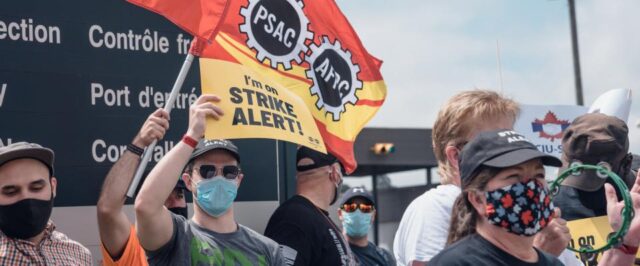
CIU members rallying with a sign that says "I'm on strike alert"

After returning to the bargaining table for two days of renewed negotiations with Treasury Board, talks stalled between PSAC-CIU and Treasury Board July 30.

It’s abundantly clear that Prime Minister Justin Trudeau’s government has not given Treasury Board a new mandate to address critical bargaining issues, including protections against a toxic workplace culture at CBSA and greater parity with other Canadian law enforcement personnel.

The FB bargaining team remains ready and available to return to the table and negotiate. In the meantime, PSAC-CIU will be mobilizing to begin sweeping job action beginning Friday August 6 if an agreement isn’t reached.

We would prefer to reach a fair agreement at the table and avoid disruptions at the border for Canadians, but the employer is leaving us with no other choice.

PSAC-CIU’s leadership is finalizing plans to coordinate strike activities across the country. You will receive more information early next week about what strike action will look like for you.

In the meantime, refer to the PSAC Strike Manual for more information on the PSAC strike structures or the Frequently Asked Questions for answers about essential employees and strike action.

You can also take several actions right now to help your FB bargaining team:

Thank you for your ongoing support and stay tuned for more details.

This article has also been posted on the PSAC website.
PSAC recognizes Canada’s first Emancipation Day

Drawing of dove and broken chains for emancipation day

On August 1, Canadians will have the opportunity to recognize Emancipation Day nationally for the first time since Members of Parliament voted unanimously to designate the day earlier this year.

Emancipation Day is an opportunity to commemorate the abolition of slavery in most of the British Empire, including Canada, in 1834. It reminds us of the inter-generational trauma and harm caused by slavery and commemorates the resilience of Black and Indigenous people, while acknowledging the need for action, justice and reconciliation.

Over the past year, we’ve seen the injustices faced by Black and Indigenous people around the world, and we’ve heard their calls for action. But change doesn’t happen overnight, or even in a year, and the work has only just begun.

Our country has a painful history of slavery that remains obscure to many Canadians. The official recognition of Emancipation Day by the federal government is a welcome step forward on the path to reconciliation by bringing long overdue awareness to Canada’s troubling and racist past.

Slavery was gradually introduced in Canada beginning in the 16th century. Indigenous peoples were the first to be enslaved, accounting for two thirds of Canada’s slave population before 1750. After 1760, Black people were brought to Canada through the transatlantic slave trade in greater numbers, and they eventually became the predominant enslaved group.

Although Black and Indigenous peoples experienced slavery differently, both were dehumanized, taken from their homes and families, trafficked, and bought and sold as commodities. The intergenerational reverberations of slavery are felt in the continued systemic racism and inequities experienced by Black and Indigenous peoples to this day.

Emancipation Day offers an opportunity to reflect on these atrocities and work toward a more inclusive and mindful future. By taking both personal and collective action, we can achieve a more equitable and just Canada.

Here are some small ways you can make a difference:

  • OBSERVE: Seek out the ways Emancipation Day is being recognized in your community or province
  • EDUCATE: Visit your local library for books about slavery in Canada
  • ACT: Join a PSAC Human Rights Committee near you

This article has also been posted on the PSAC website.
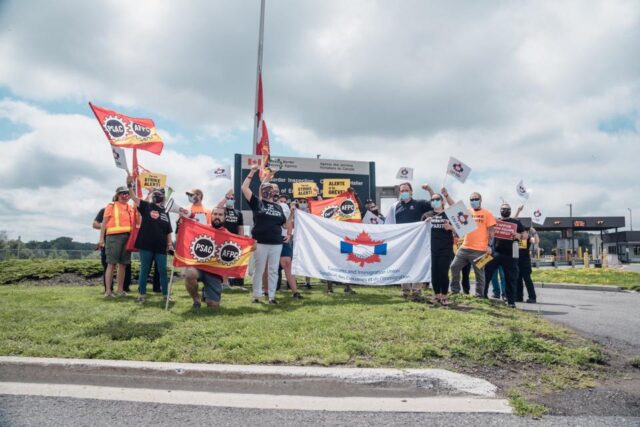
CBSA employees, government resume talks after strike mandate

Photo of CIU members protesting

Just hours after announcing that Canada Border Services Agency (CBSA) employees had voted overwhelmingly in favour of strike action at Canada’s borders, unionized workers and the employer – CBSA and Treasury Board Secretariat – agreed to return to the table to resume negotiations on July 29.

“The government is clearly concerned about our strike mandate and the possibility of major disruptions at the border,” said Chris Aylward, PSAC national president. “We’re going back to the table with an open mind, but we’ve been crystal clear that if they want to avoid a strike, they need to bring a new mandate to address major workplace issues.”

Negotiations resume the day after the Public Interest Commission (PIC) released its recommendations for both parties to reach a deal, including many improvements to the working conditions of CBSA employees. Read more about the PIC’s recommendations.

With the release of the PIC report, The Public Service Alliance of Canada (PSAC) and the Customs and Immigration Union (CIU) can legally call a strike on August 6 if a deal is not reached.

“Going back to the table is a step in the right direction, but the fact remains that we are grappling with systemic workplace harassment issues that the employer must be willing to address,” said Mark Weber, CIU national president. “Beyond needing stronger protections against a toxic workplace culture, our members also deserve parity with the broader law enforcement community.”

CBSA employees have been without a contract for over three years. They are seeking better protections against a toxic workplace culture at CBSA, and greater parity with other law enforcement agencies across Canada. The union declared impasse in December and applied for a Public Interest Commission hearing after CBSA and Treasury Board were unwilling to address these concerns.

This article has also been posted on the PSAC website.
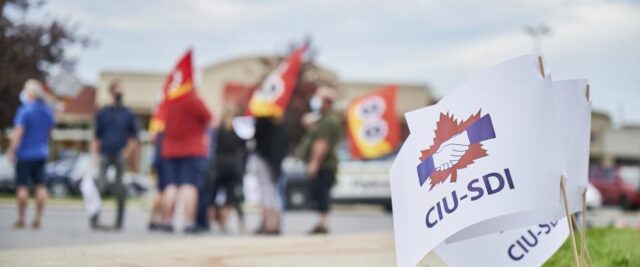
FB bargaining team receives Public Interest Commission recommendation

Banner-FB-Bannière
Banner-FB-Bannière

PSAC-CIU received the Public Interest Commission’s report July 28 with their non-binding recommendations for reaching an agreement at the bargaining table. The report comes the day  after the union’s announcement of the FB strike vote results and puts us in a legal strike position as early as Friday, August 6.

Read the full PIC report

The report contains several important recommendations, including:

  • Opening the door for a discussion about a paid, pensionable meal period for union members;
  • Calling for paid firearm practice time and a fitness allowance for officers;
  • Recommending new protections for employees in the context of discipline;
  • Encouraging the parties to negotiate expanded seniority rights for scheduling and parameters regarding student work at CBSA;
  • Recommending language that ensures officers aren’t required to work alone, the grievance procedure is streamlined, and a negotiated increase in shift premium.

With respect to wages, the report states, “It is worth noting that the settlements for the FB group in the three previous rounds of bargaining have exceeded the core public administration pattern.”

Of significance, the recently negotiated settlement for RCMP employees was reached after the Public Interest Commission hearings took place in May and, therefore, did not form any part of the PIC deliberations.

While the report was silent about remote work for non-uniformed members, and pension reform (25 and out) is outside the PIC’s jurisdiction and therefore not addressed in the report, our team will continue to push for these improvements.

Our union and the employer have agreed to return to the bargaining table to resume talks on Thursday, July 29. The FB team is hopeful that Treasury Board and CBSA will return to the bargaining table with a renewed mandate to reach a fair agreement for PSAC-CIU members.

Make sure to keep your contact information up to date via the PSAC member portal to receive all the latest updates as we prepare to negotiate your next contract.

This article has also been posted on the PSAC website.

Thousands of Canada Border Service Agency employees vote to strike

More than 8,500 unionized staff with the Canada Border Services Agency (CBSA) have given their union an overwhelming strike mandate, throwing into question the federal government’s plans for a smooth reopening of the Canada-U.S. border this summer as a federal election looms. CBSA employees could potentially begin strike action as soon as August 6, 2021.

The employees — members of the Public Service Alliance of Canada (PSAC) and the Customs and Immigration Union (CIU) — have been without a contract for over three years. They are seeking better protections against a toxic workplace culture at CBSA, and greater parity with other law enforcement agencies across Canada. The union declared impasse and applied for a Public Interest Commission ruling after CBSA and Treasury Board were unwilling to address these concerns.

“Our members at CBSA have been on the front lines throughout the pandemic, and many have contracted COVID-19 while working,” said Chris Aylward, PSAC national president. “They’ve kept our borders safe, screened travelers entering Canada, and ensured the rapid clearance of vaccine shipments. Now it’s time for the government to step up for them the way they’ve stepped up for Canadians.”

Risk of significant economic disruption

A labour dispute while borders begin to reopen could cause a significant disruption to the flow of goods, services and people entering Canada, and impact the Canadian economy by:

  • Slowing down commercial traffic at the border and ports of entry;
  • Impacting international mail and parcel deliveries from Canada Post and other major shipping companies;
  • Impact the collection of duties and taxes on goods entering Canada.

“Taking strike action is always a last resort, but we’re grappling with systemic workplace harassment issues that must be addressed,” said Mark Weber, CIU national president. “The toxic workplace culture at CBSA is taking a heavy toll on the mental health and well-being of our members.”

The federal government recently reached a tentative agreement with RCMP members that closed wage gaps and provided more supports for its members, showing a clear willingness to negotiate from the government. CBSA employees deserve the same level of respect at the bargaining table.

“We’ve told the government numerous times that we’re ready to return to the table to negotiate a fair contract that addresses our members’ concerns,” added Aylward. “But their window to avert a strike is quickly closing.”

PSAC-CIU members at CBSA include border service officers at airports, land entry points, marine ports, and commercial ports of entry, inland enforcement officers, intelligence officers, investigators, trade officers, hearings officers and non-uniformed members. The strike vote was held between June 16 and July 23.

This article has also been posted on the PSAC website.
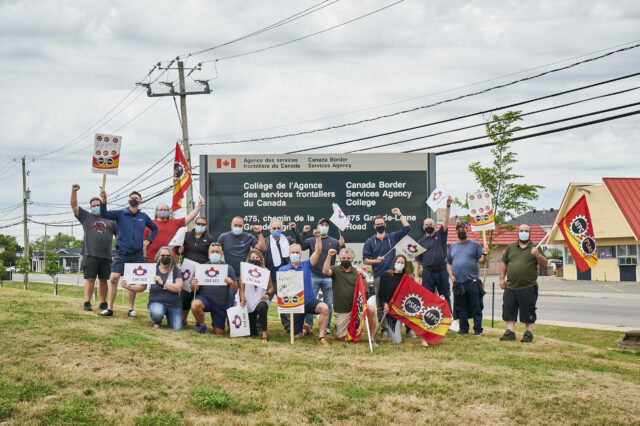
FB Group : PSAC-CIU rally in Rigaud

Early in the morning of June 25, CIU and PSAC rallied at the CBSA College in Rigaud to send a clear message to the employer: We’re ready to ramp up the pressure and fight for a fair contract. That means parity with other law enforcement agencies and better protection against harassment and discrimination.